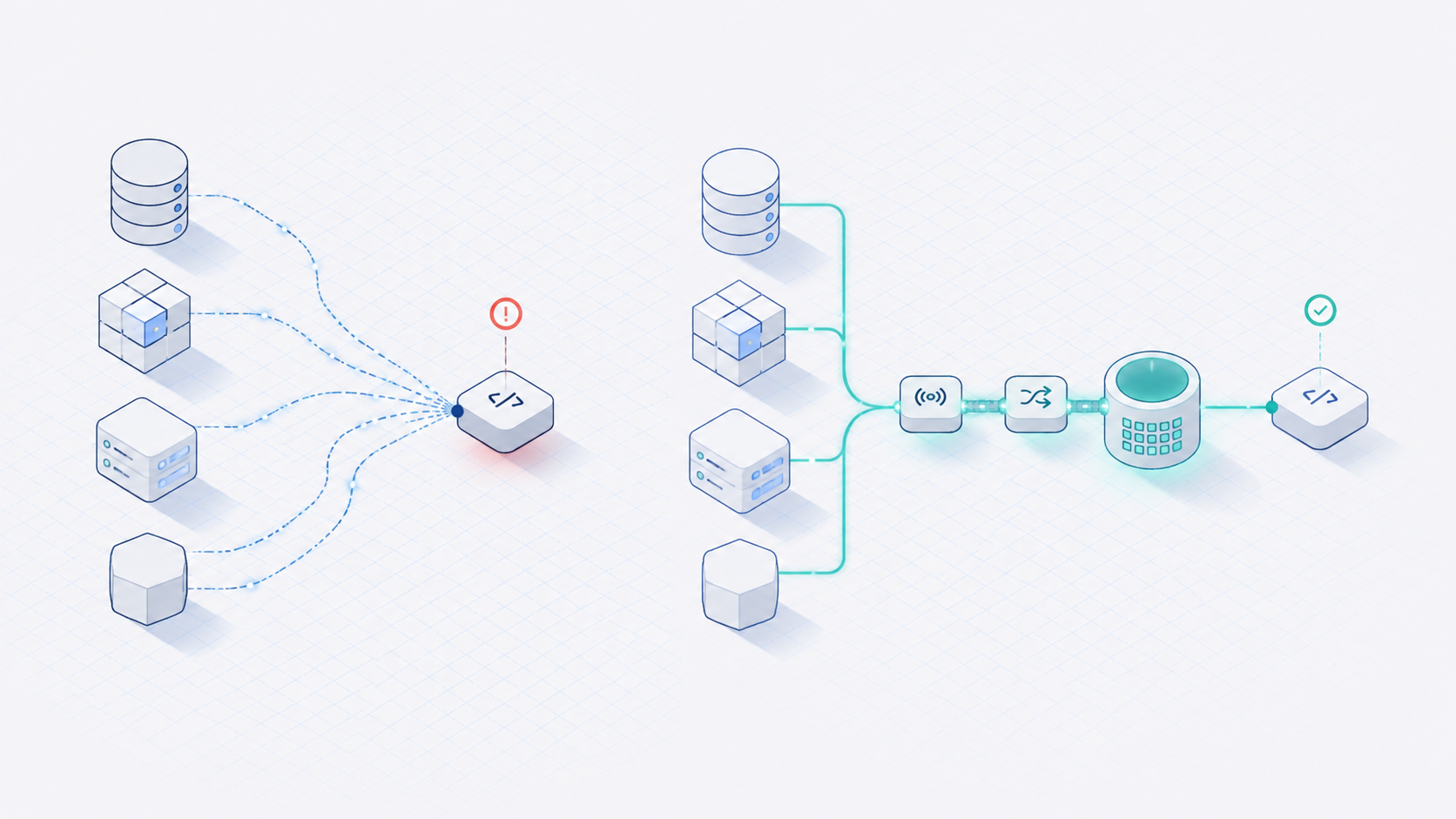
An operational API can look deceptively simple. A client asks for an order, account, customer, or inventory record; the API queries the relevant systems, assembles a response, and returns it.
At low traffic, that architecture may be perfectly reasonable. The problem appears as the API becomes part of an operational workload. Each request can fan out into several production reads, and the API starts inheriting the latency, availability, schema changes, and maintenance windows of every system behind it.
What began as a thin interface gradually becomes a live integration layer sitting directly on top of systems whose first responsibility is still transaction processing.
For read-heavy operational APIs, there is another option: maintain an application-facing representation of current state continuously, then let the API read from that representation instead of reconstructing it from production systems on every request.
Why thin APIs become expensive at scale
Consider an order-status endpoint that needs data from an order database, a payment system, a warehouse application, and a carrier service.
One API call may produce several downstream reads. More client traffic means more fan-out, and those dependencies remain in the request path every time. If the warehouse system slows down, the endpoint slows down. If one source enters maintenance, part of the response may disappear. Retries can make matters worse by sending additional traffic to a system that is already struggling.
The coupling is not only operational. The API also sits close to source-specific schemas, authentication mechanisms, and data models. A change that is harmless inside one source system can become a breaking change for an externally consumed API unless another abstraction layer absorbs it.
Read replicas help when the primary problem is read pressure on a particular database. They do not, by themselves, solve the broader problem of assembling operational data across several systems, reshaping it around application access patterns, or isolating API availability from cross-system dependencies.
Once those concerns appear together, the architecture has moved beyond simple database read scaling.
Put maintained operational state between source systems and the API
A more durable design separates systems that own business transactions from the state that applications need to read repeatedly.
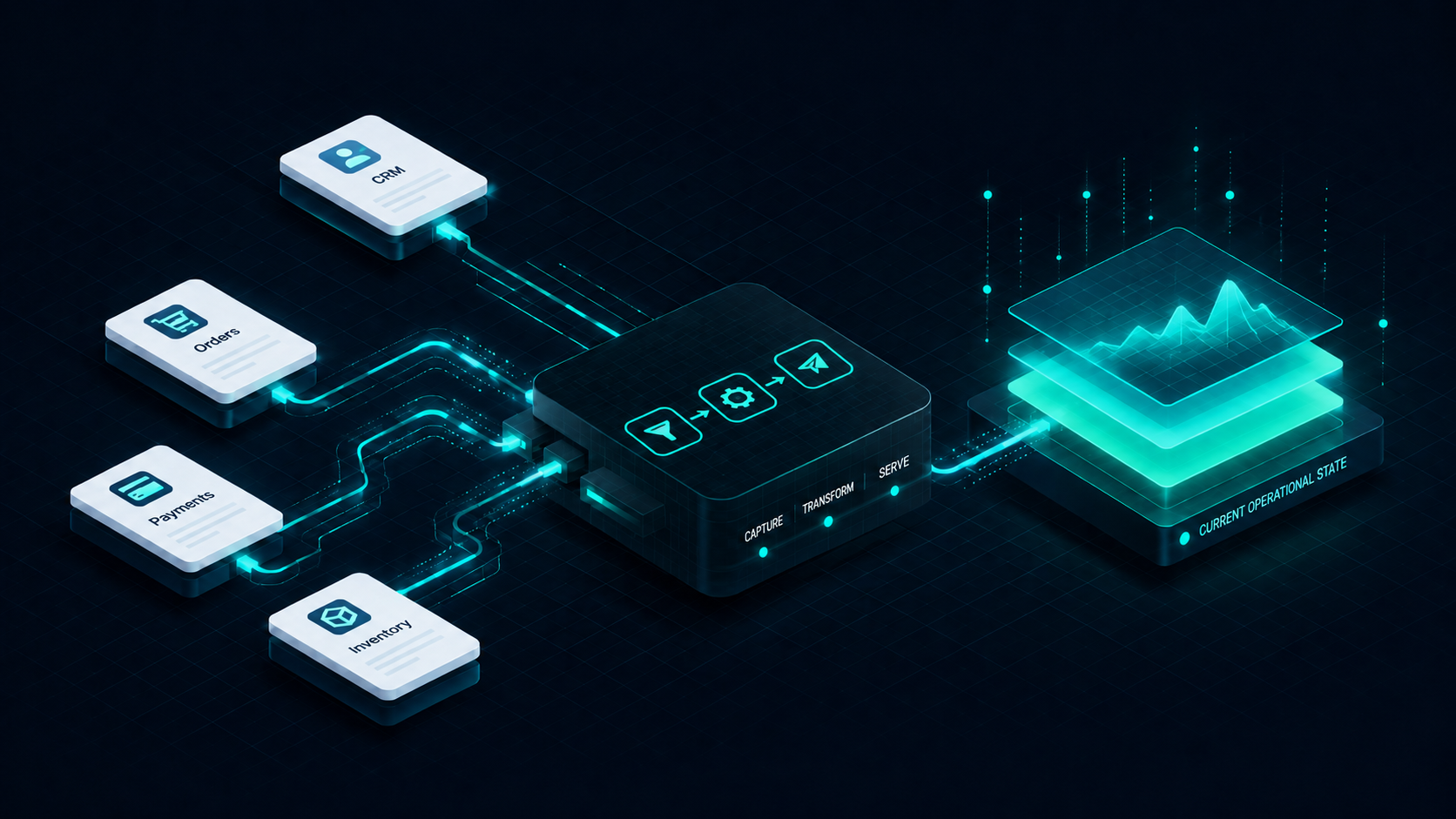
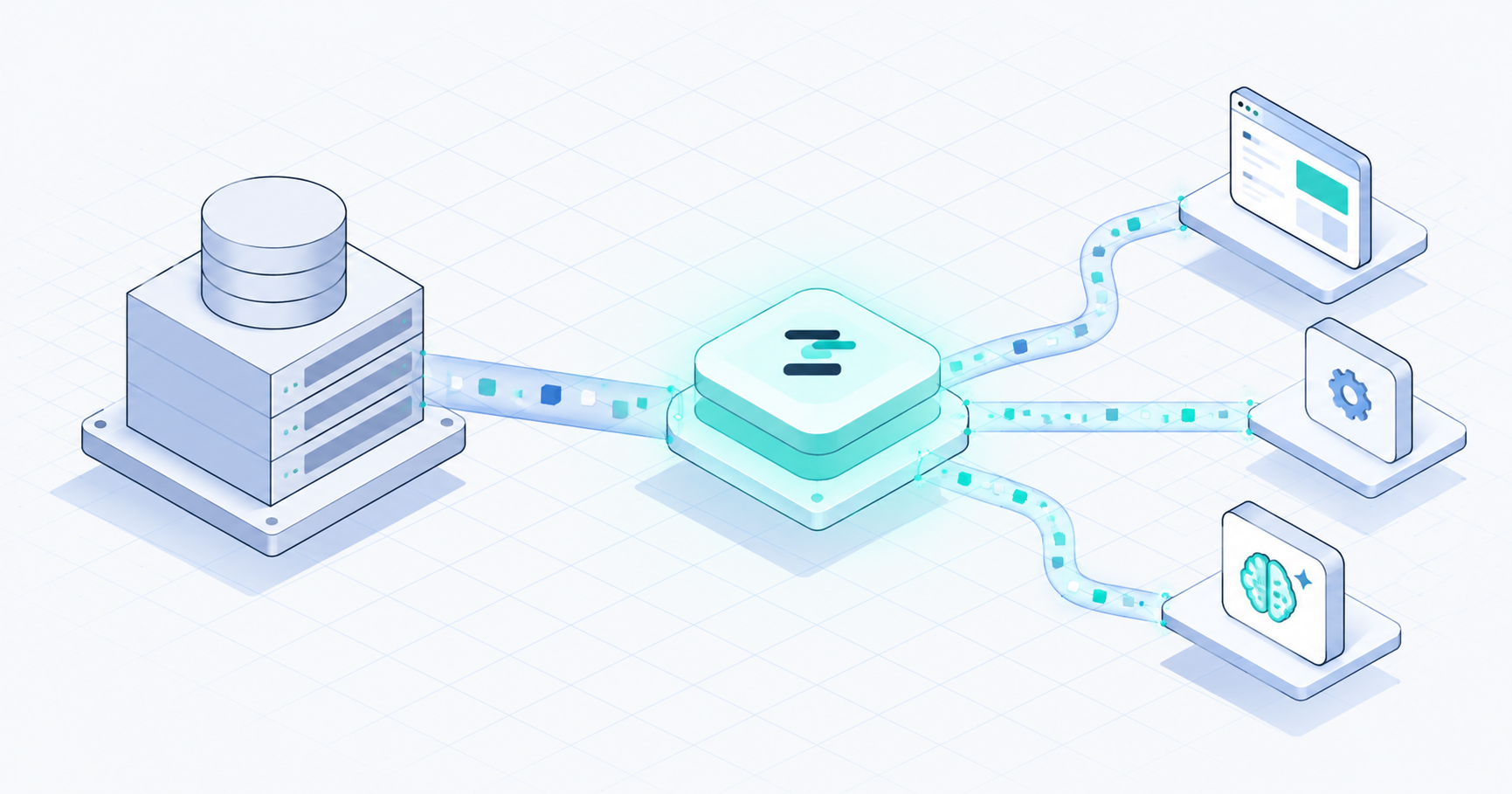
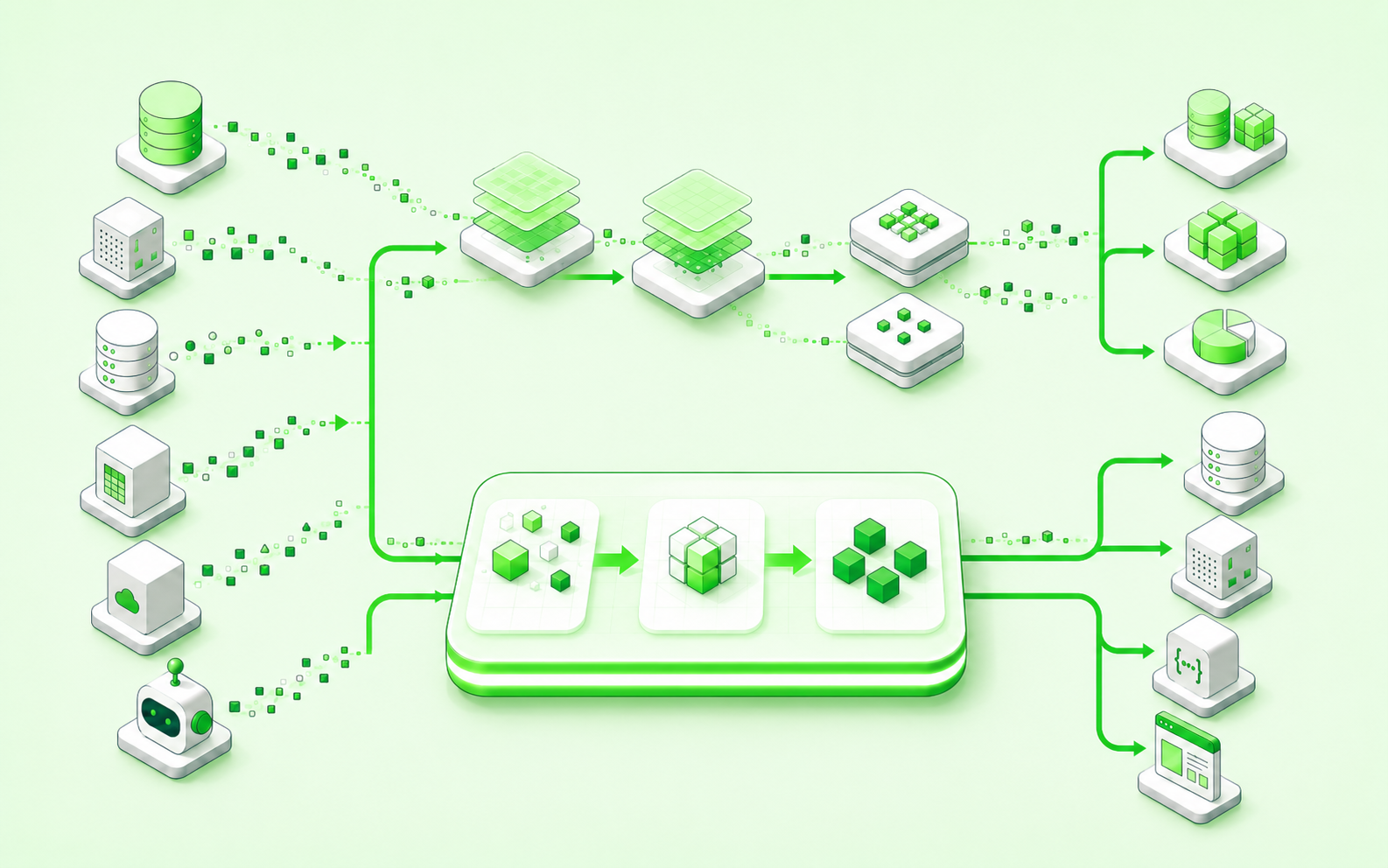
Systems of record continue to validate and commit writes. A continuous data path follows committed changes, applies the transformations needed for downstream use, and maintains a serving representation organized around entities such as customers, orders, products, or accounts. APIs then read that maintained representation instead of rebuilding it from source systems for every request.
The path looks roughly like this:
- Systems of record remain authoritative for transactions.
- Committed changes are captured continuously.
- Transformation logic combines and reshapes source records around application-facing entities.
- Current state is materialized in a serving backend.
- APIs read that state and remain responsible for authorization, business behavior, and their public contracts.
This is fundamentally different from adding dual-write logic to an application. The application still writes to the system that owns the transaction. The downstream state is updated from the committed result.
In Tapstate's architecture, this maintained representation belongs to the Operational State Layer: current, queryable state maintained from operational sources and organized for reuse by applications and other consumers. An operational API is one consumer of that layer rather than the mechanism responsible for rebuilding the state itself.
That distinction matters because the serving model can now be designed around how the API actually reads data.
If an endpoint usually retrieves an order by order ID, the serving representation can maintain that order under a stable entity key. If a customer profile requires data owned by several systems, those attributes can be consolidated ahead of the request rather than joined repeatedly during the request.
The goal is not to reproduce normalized production schemas somewhere else. It is to maintain the state that the consuming workload needs.
Offloading reads changes the API contract
Moving reads away from the transaction system is not only a performance decision. It changes what the API can promise.
The API is no longer reading inside the same transaction boundary as the source. It is reading a continuously updated representation of committed state. For many operational endpoints—order status, customer profiles, service dashboards, inventory visibility, or account servicing—that is a useful tradeoff. But freshness and authority must become explicit parts of the design.
The team needs to decide how much lag is acceptable, what happens if one source domain stops updating, how deletes are represented, and which decisions still require an authoritative read.
A customer-service application, for example, may be able to work with maintained state and an observation timestamp. A balance-changing decision or payment authorization may still need to go directly through the system that owns the transaction.
The same boundary applies to writes.
A GET /orders/{id} endpoint can safely read an offloaded representation if its consistency contract allows it. A cancellation command should still execute through the order system that owns cancellation rules, authorization, concurrency control, and transaction semantics. Once the command commits, its result can flow back into the maintained state.
This separation prevents a serving database from quietly becoming an accidental system of record simply because it is convenient to access.
Read-your-write behavior also needs an explicit design. An API can return the authoritative result produced by the command, wait until a known version becomes visible in the maintained state, or temporarily reconcile with the source for workflows that require stronger guarantees. There is no single correct choice; the important point is that the choice belongs in the API contract rather than being hidden behind an assumption that low average replication lag makes every request equivalent to an authoritative read.
Degraded operation deserves the same treatment.
“Entity not found” is not always the same thing as “the entity may be unavailable because one source domain is delayed.” Depending on the workload, an API may serve last-known state with an observation time, omit a noncritical domain, or reject an action whose safety depends on fresher information.
A successful HTTP response containing stale operational data can be more dangerous than an explicit failure when another system is about to act on that response. Freshness therefore needs to be observable, not merely assumed.
The new read path has to be operated as a system
Removing production systems from the synchronous read path reduces one class of operational dependency, but it does not remove operational responsibility.
The maintained state path now has its own health signals: source position, capture lag, transformation failures, target write errors, durable checkpoints, serving latency, and recovery progress. API availability alone cannot tell operators whether the data being returned is still current.
The serving model also has to survive its own workload.
Entity size, key distribution, update frequency, read concurrency, hot keys, and index cost all matter. A representation that works well for one endpoint may become inefficient if an aggregate grows without bound or if frequently changing child collections force large documents to be rewritten continuously.
Load testing should therefore include more than steady-state reads. Capture, backfill, catch-up, index maintenance, and recovery can all compete for resources in the serving layer. If the objective is to isolate production systems from read-heavy workloads, the new path must be able to absorb those peaks itself.
Correctness needs to be tested under the same conditions.
A useful acceptance test compares the maintained response with an authoritative read during normal operation, controlled delay, catch-up, and recovery. The point is not to prove that every endpoint is transactionally identical to the source; many are intentionally not. The point is to demonstrate that the consistency semantics promised by the API remain true when the data path is under stress.
That is what turns read offloading from a performance optimization into a dependable operational architecture.
Where Tapstate fits
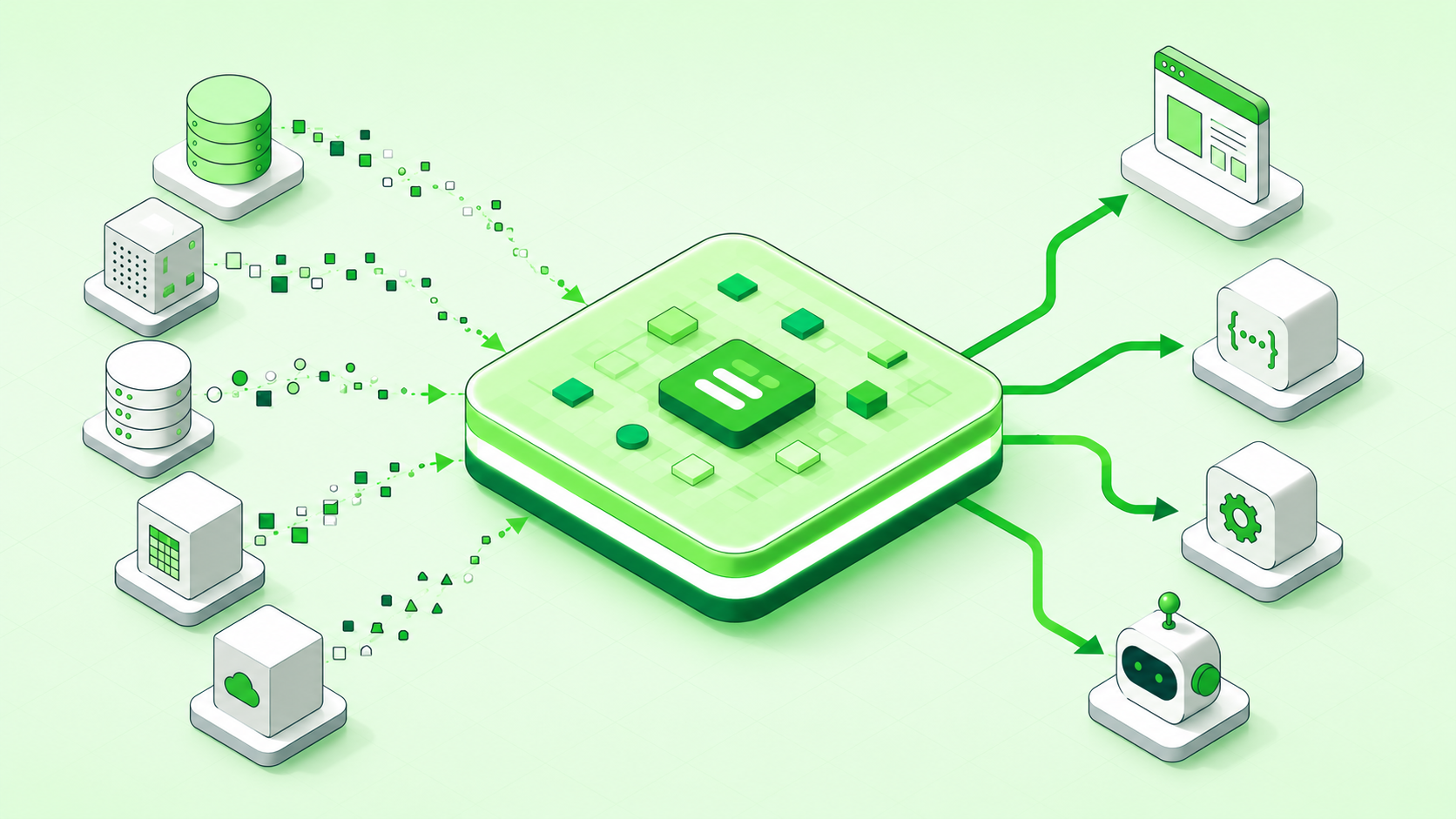
Tapstate provides the source-to-serve path for maintaining application-facing operational state.
It captures existing data and supported committed changes from source systems, transforms records into downstream representations, and materializes current state through supported targets, with MongoDB serving as the current reference backend. Applications and APIs can then consume that maintained state without repeatedly rebuilding it from production systems.
Tapstate does not replace the responsibilities of the API itself. Authorization, command behavior, application logic, and the public API contract remain with the application layer. Systems of record remain authoritative for writes.
The architectural change is narrower, but important: instead of treating every API request as a new integration job across production systems, the integration work happens continuously and the resulting operational state is maintained for reuse.
That gives APIs a simpler runtime path, production systems a more predictable workload, and engineering teams a clearer place to reason about freshness, recovery, and serving behavior.
——————————————————
Try this architecture with Tapstate
Build a data path that keeps operational state current for APIs and applications—without putting every read back on production systems.
[Try Tapstate]