The direct answer
Tapstate and Materialize overlap more than their category labels initially suggest.
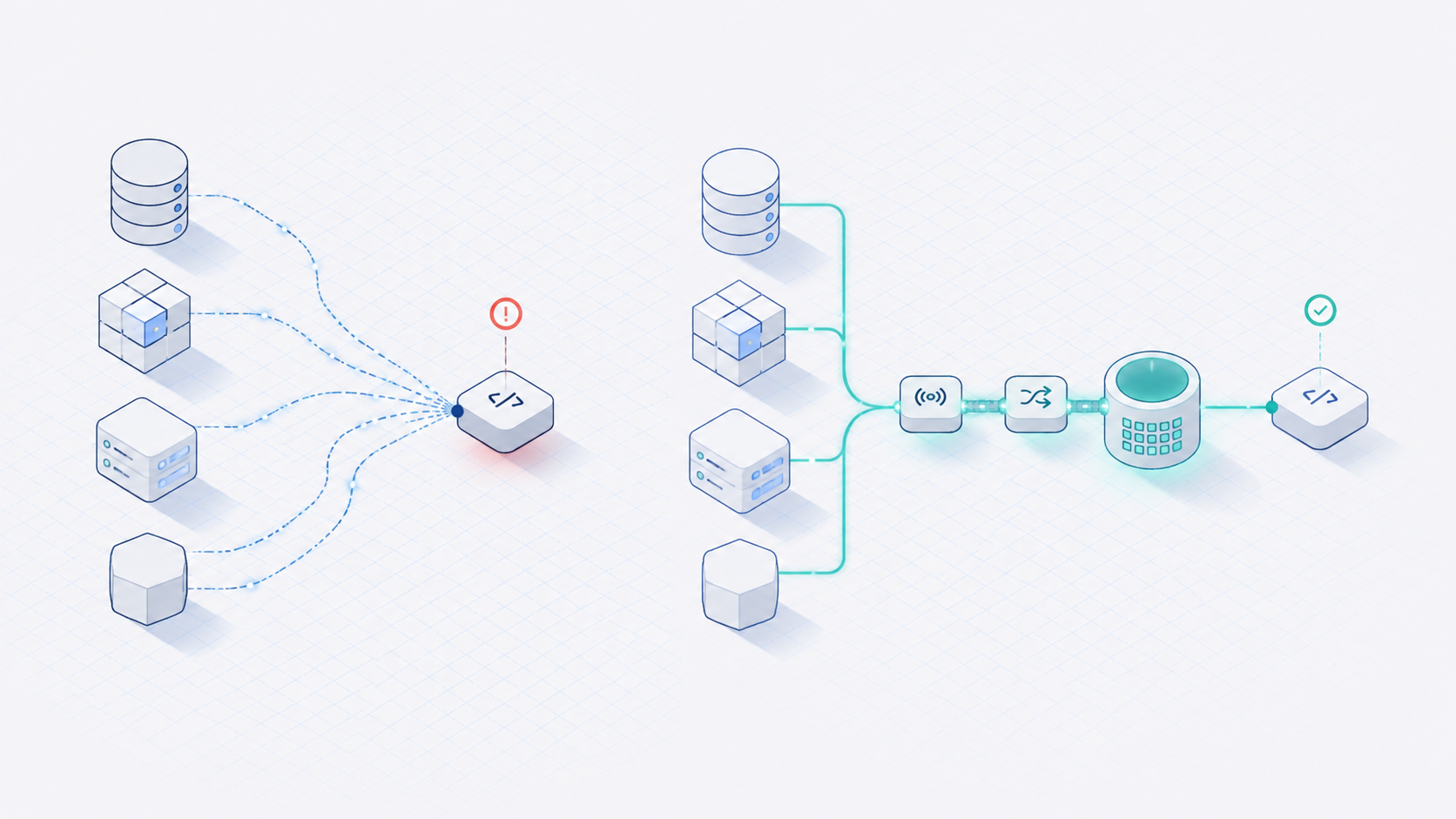
Both address a familiar problem: operational data is distributed across systems, production databases are not ideal serving layers for every downstream workload, and applications or AI agents increasingly need current business context rather than delayed analytical snapshots.
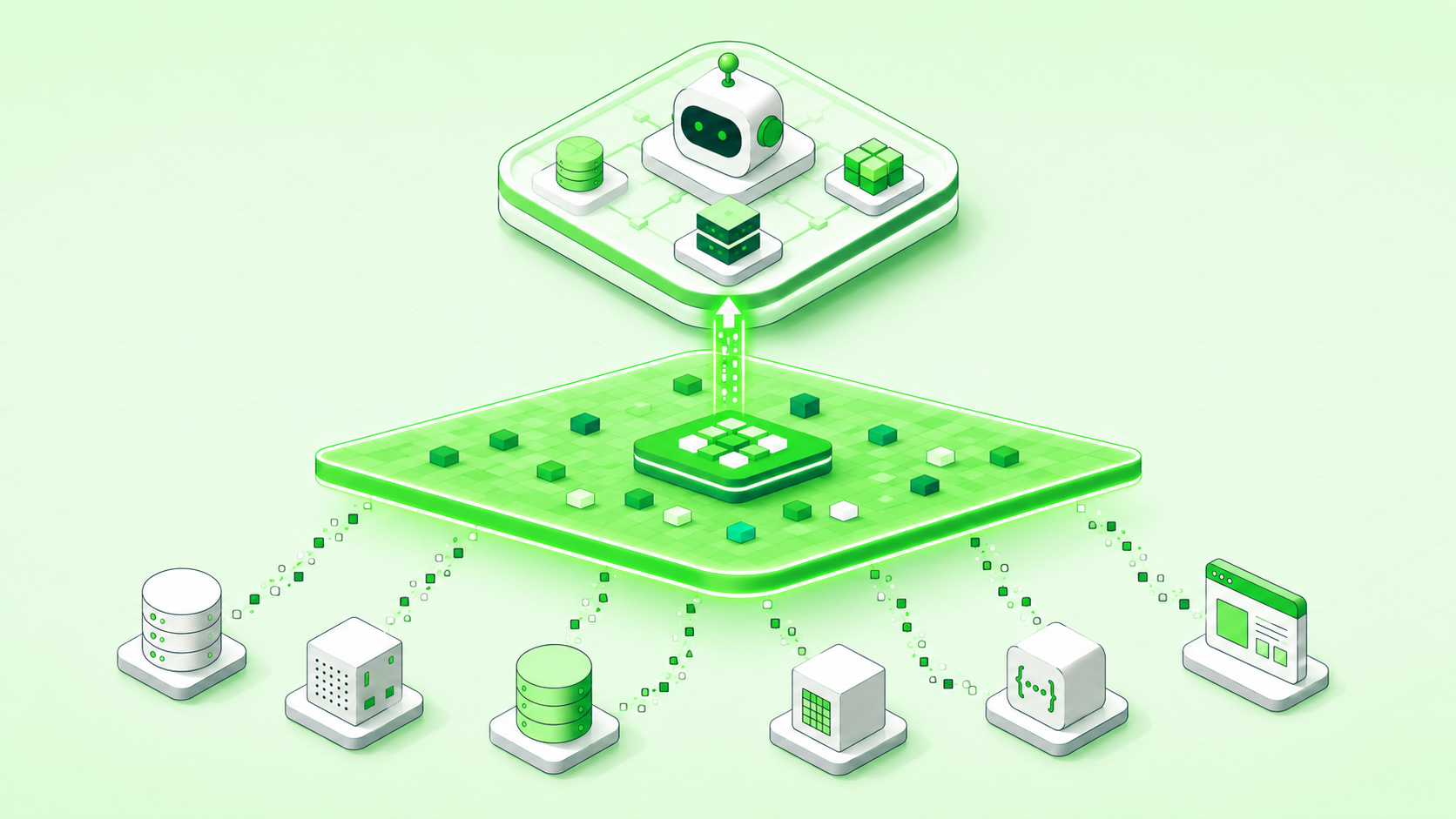
Materialize approaches this problem as a SQL-first live data layer. It ingests continuously changing data, lets teams define business objects through SQL views, and incrementally maintains the results for applications, services, dashboards, and agents.
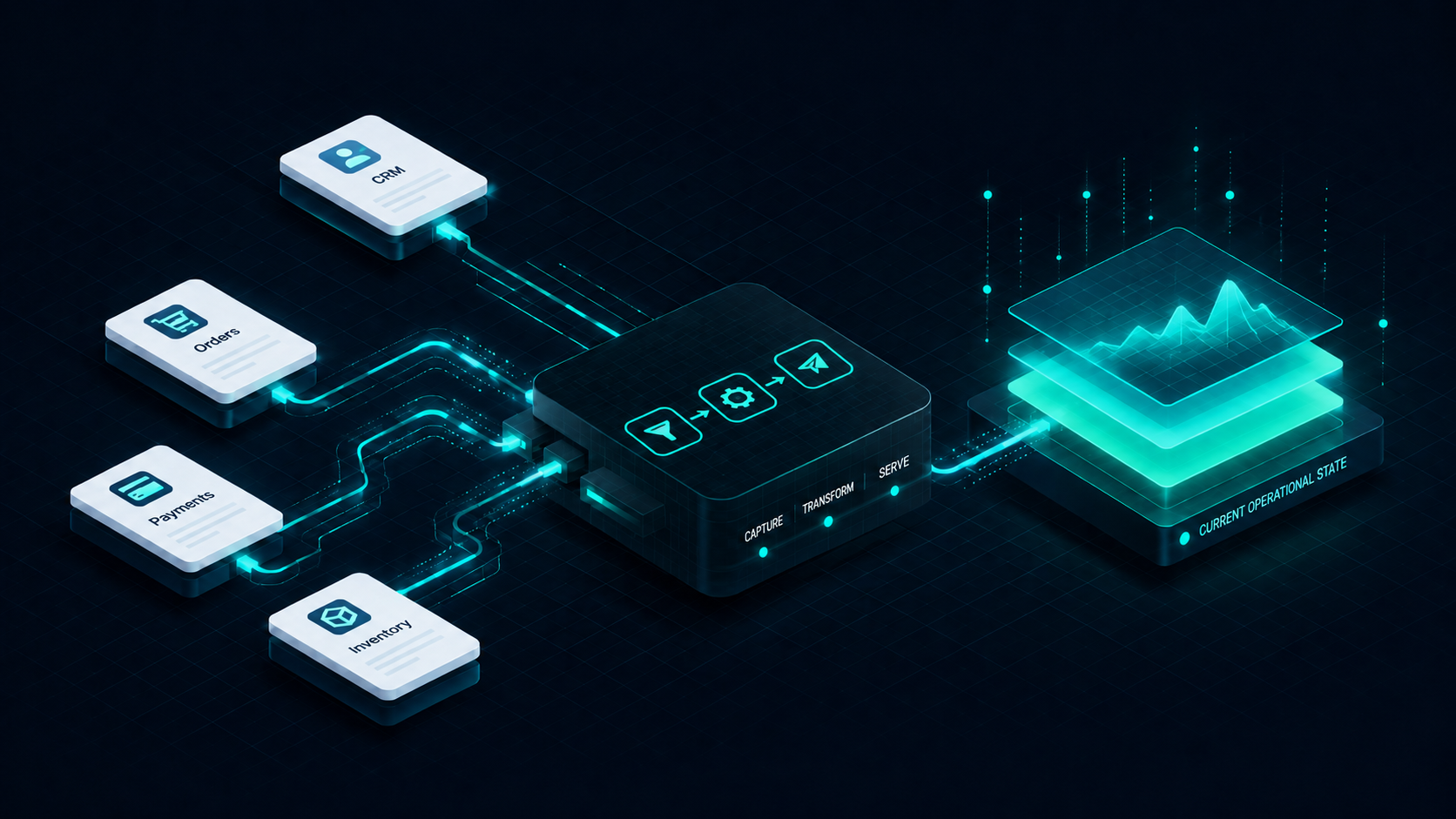
Tapstate approaches the problem as an end-to-end operational data responsibility. Its organizing model is Capture, Transform, and Serve: acquire changes from operational systems, reshape them incrementally, and maintain usable Operational State for repeated consumption.
The difference is not that Materialize maintains Views while Tapstate serves applications. Materialize can maintain many Views, serve multiple consumers, persist results, expose live updates, and provide Agent access through MCP.
The more useful distinction is:
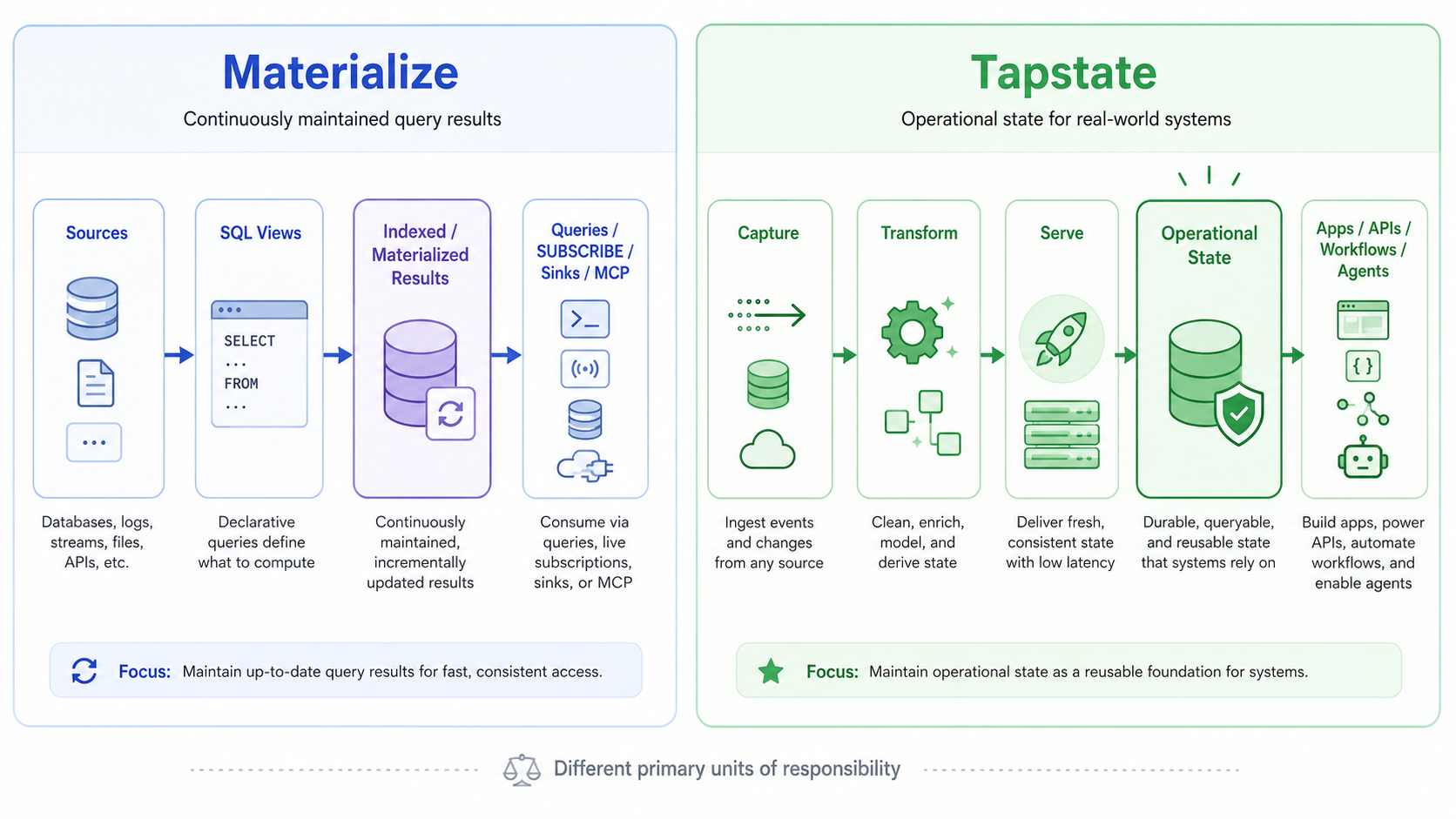
Materialize is organized around continuously maintained, SQL-defined live data products. Tapstate is organized around the complete operational-state lifecycle from source capture through transformation and serving.
Depending on the workload, those boundaries may overlap substantially—and Materialize may already provide everything the application needs.
The overlap is real
This is not a comparison between a simple CDC connector and a full data platform.
Materialize bundles native connectors for operational databases including PostgreSQL, MySQL, SQL Server, CockroachDB, and MongoDB, as well as Kafka, Redpanda, and webhooks. Sources appear as continuously updated tables inside Materialize.
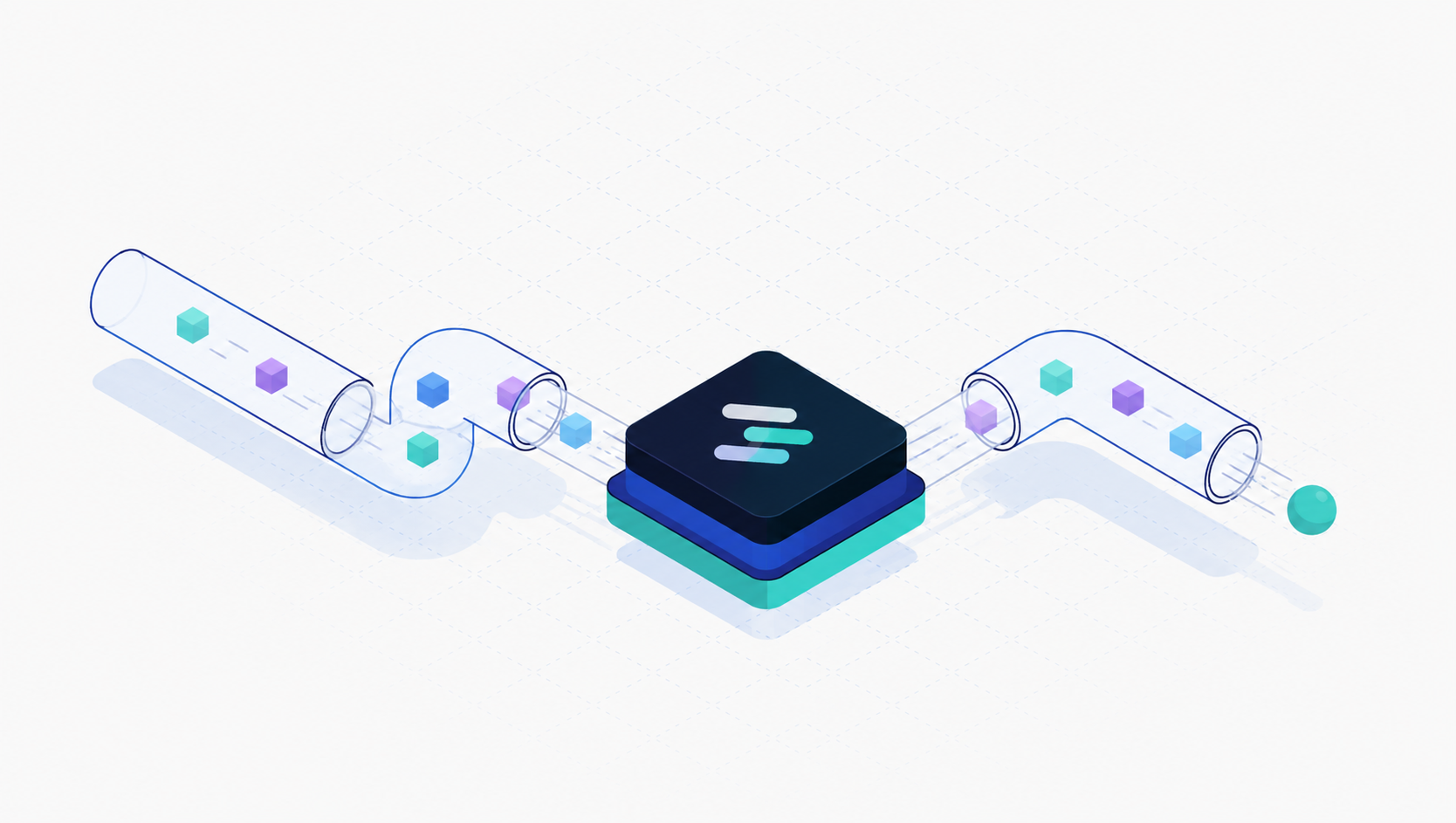
Teams then use SQL Views to join, filter, aggregate, and reshape those sources into live data products such as customers, orders, or stores. Indexed Views maintain results in memory within a cluster, while Materialized Views persist incrementally updated results in durable storage and make them available across clusters.
Those results can be:
- queried using
SELECT; - consumed as continuous updates using
SUBSCRIBE; - written into systems such as Kafka, Iceberg, S3, PostgreSQL, or Redis through different sink methods;
- exposed to agents through Materialize’s MCP server.
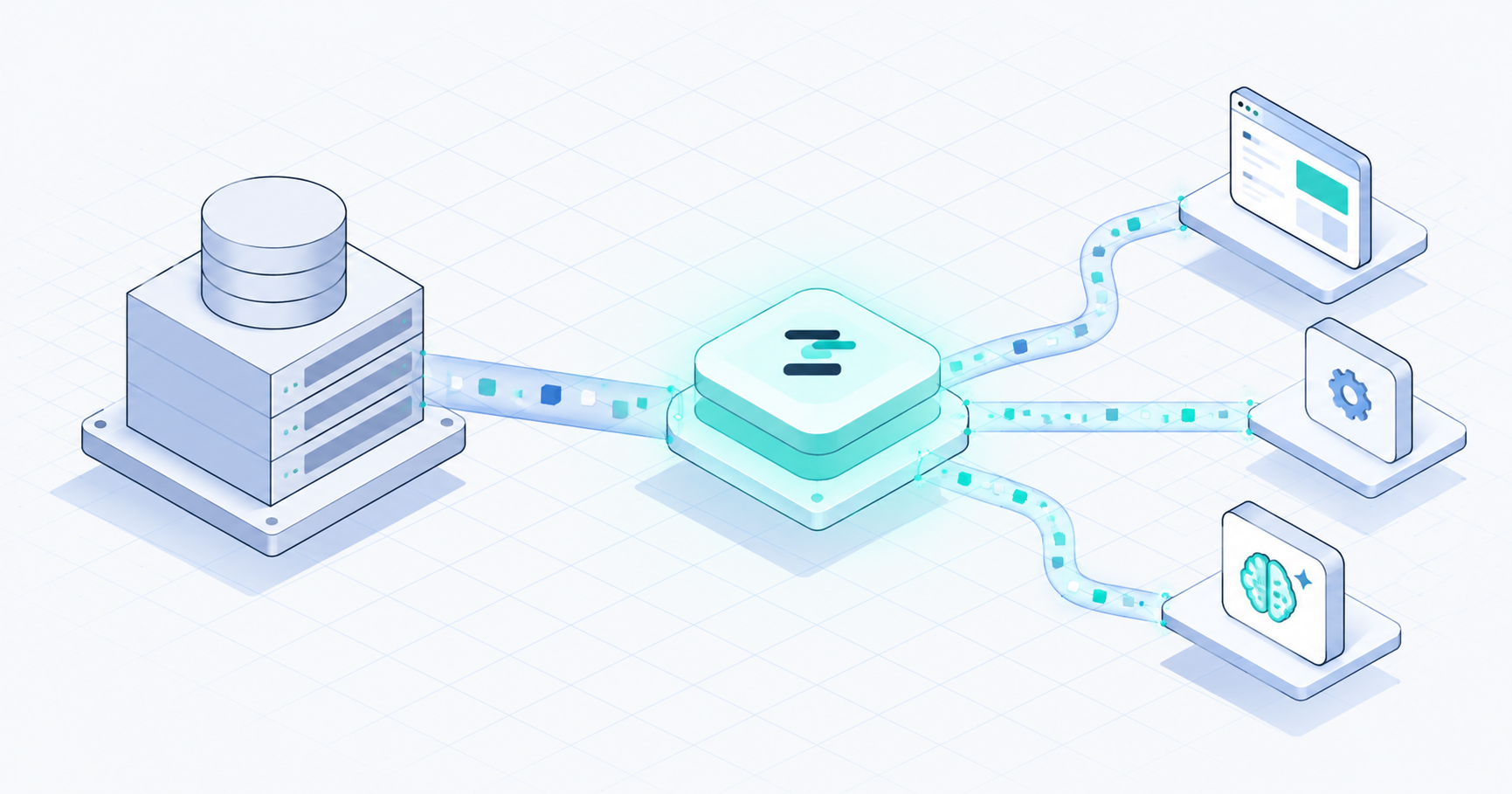
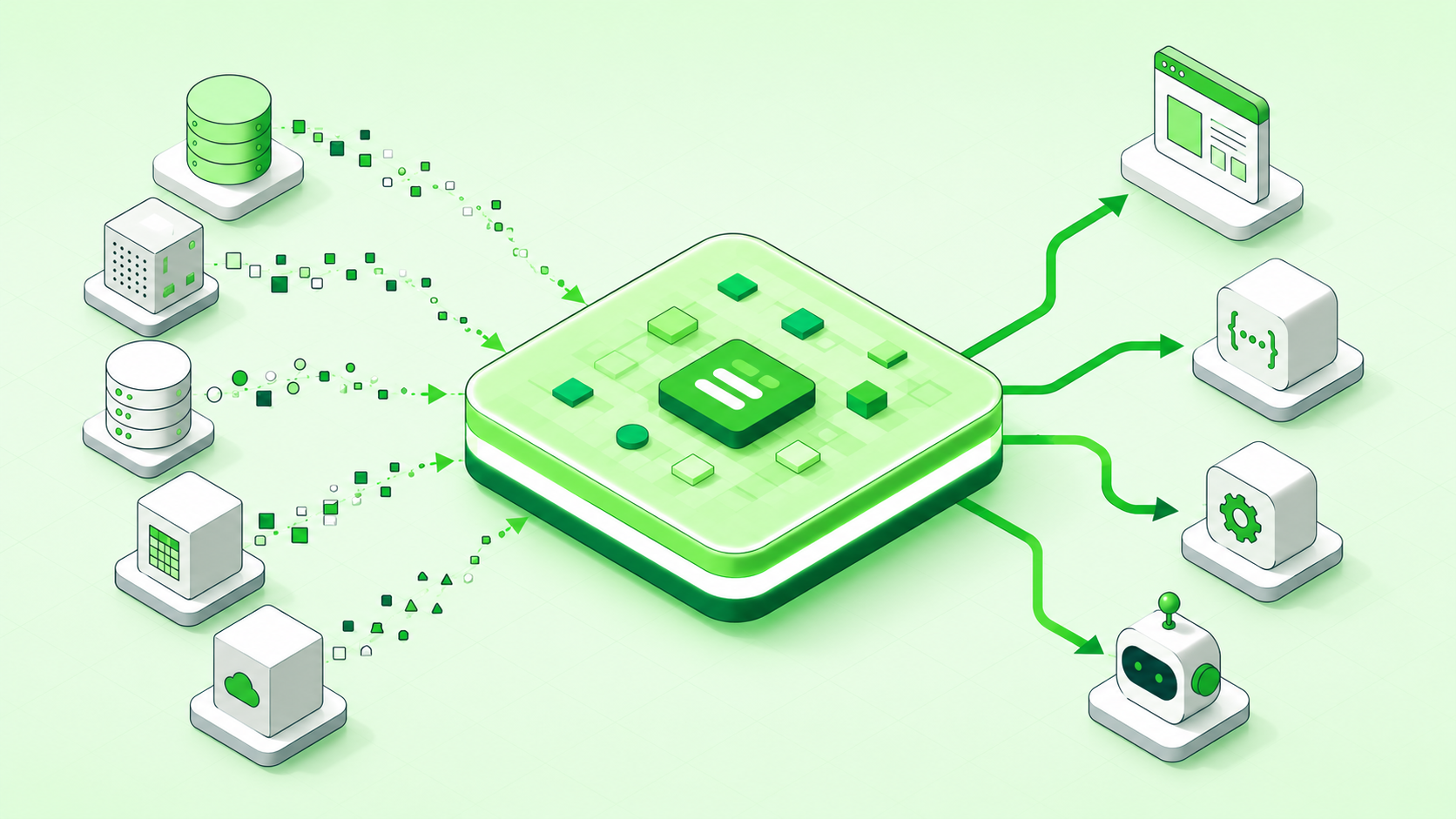
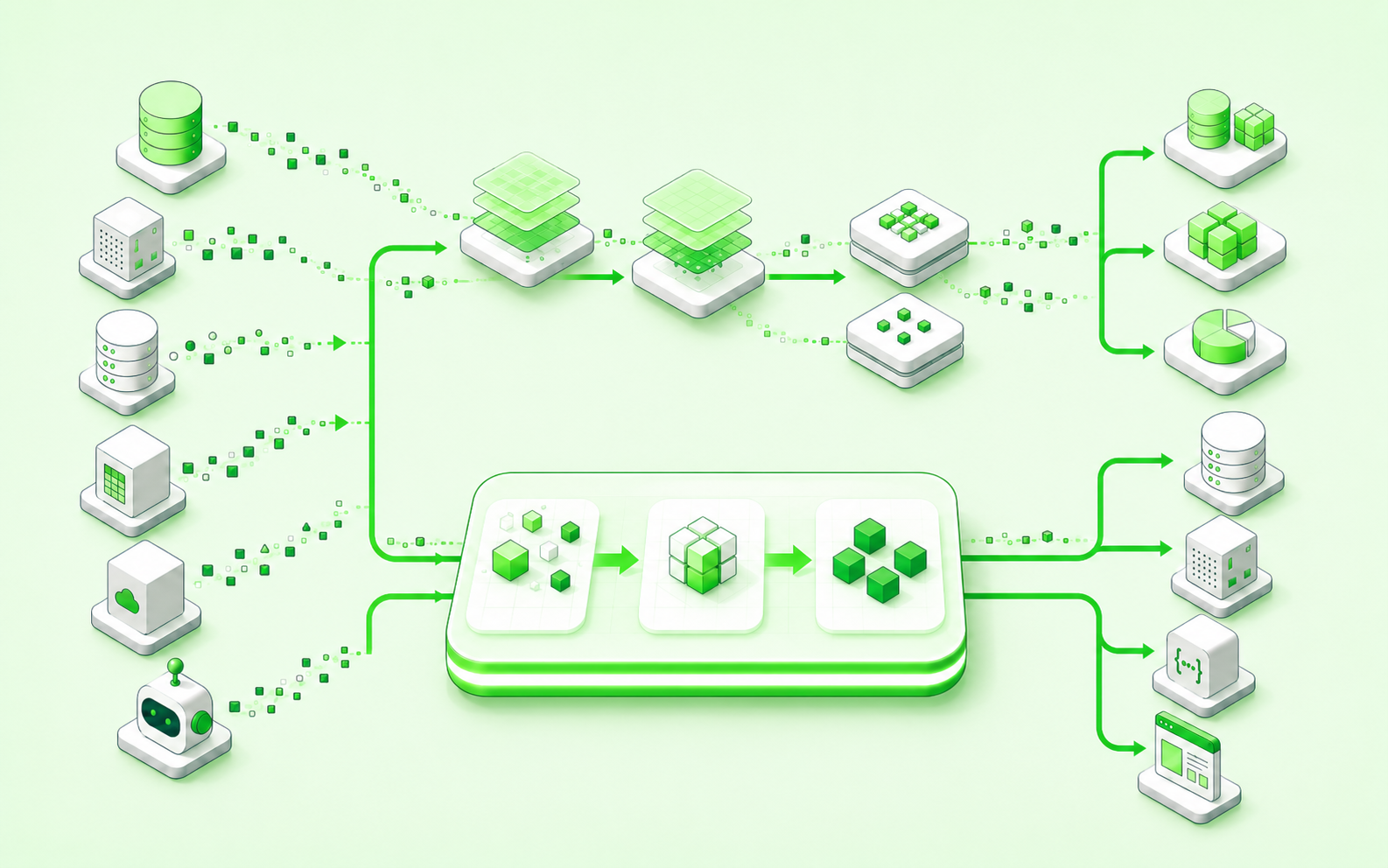
Tapstate similarly starts from changing operational sources, performs incremental transformation, and maintains state intended for applications, APIs, workflows, automation, and agents. Its architectural goal is to turn repeatedly assembled capture, processing, state-maintenance, and serving work into one coherent operational path.
The two products therefore meet around a genuine shared requirement:
Turn changing operational data into current, reusable context without repeatedly querying production systems or rebuilding the same logic for every consumer.
The comparison becomes useful only after acknowledging that overlap.
The core difference: the primary unit of responsibility
Materialize’s primary user-facing unit is the SQL-defined data product.
A source becomes an updating table. SQL Views define reusable business logic. An index or Materialized View keeps the selected result current. Applications then query, subscribe to, or export that result. Materialize’s architecture can separate source ingestion, compute and transformation, and query serving into independently scaled clusters.
Tapstate’s primary unit is the maintained operational path.
The product model begins with three continuous responsibilities:
- Capture changes from operational systems and maintain continuity from initial state to ongoing changes.
- Transform those changes incrementally into consumer-oriented entities.
- Serve maintained state for repeated operational use.
The result is framed as an Operational State Layer: an architectural capability between systems of record and operational consumers.
That does not mean Materialize lacks a source-to-serve architecture. Its own production guidance describes source, compute/transform, and serving tiers.
The distinction is one of center of gravity:
- Materialize begins with the database and SQL computation model.
- Tapstate begins with the lifecycle and ownership of operational state across source, transformation, recovery, and consumption.
For many workloads, both routes can arrive at a similar result.
Capture: connector availability versus source responsibility
Materialize provides first-party ingestion for a defined set of databases, brokers, and webhook sources. Teams configure those external systems so Materialize can connect and ingest them, and sources consume Materialize compute resources.
This is a strong fit when:
- the required sources are supported;
- those sources can be configured for Materialize ingestion;
- SQL tables are an appropriate representation of the incoming data;
- the team is comfortable operating the source configuration and Materialize source clusters.
Tapstate places more conceptual emphasis on Capture as a product responsibility of its own. That includes initial load, ongoing change capture, ordering and transaction context, checkpointed recovery, and continuity between backfill and streaming. Connector engineering is treated as source-specific operational knowledge rather than only an integration checkbox.
This distinction becomes meaningful when the hard part of the project is not only querying changes after they arrive, but reliably acquiring them from heterogeneous or operationally difficult systems.
It should not be reduced to “Tapstate has more connectors.” That is a factual product comparison requiring current, source-by-source verification.
The better question is:
Does the workload fit inside Materialize’s documented ingestion boundary, or is source-specific capture itself a central part of the architecture problem?
Transformation: SQL data products versus an operational transformation path
Materialize makes SQL the central modeling interface.
Views can be composed into richer Views, reused by multiple definitions, indexed for in-memory serving, or materialized for durable, system-wide access. This is especially attractive to teams that want complex joins and aggregations expressed through familiar PostgreSQL-style SQL.
Tapstate’s Transform responsibility covers filtering, routing, normalization, enrichment, joins, denormalization, and reshaping source-oriented records into consumer-oriented entities.
The practical distinction is not simply SQL versus no SQL.
It is whether the team wants:
- a database-centric modeling environment where live products are primarily defined as SQL Views; or
- a broader operational flow where Capture, transformation, state maintenance, and serving are managed as one lifecycle.
Materialize is likely the more natural fit when SQL is the desired control surface and the intended product is a collection of continuously maintained relational data products.
Tapstate is designed for teams that regard transformation as one responsibility inside a larger operational-data lifecycle rather than the central abstraction by itself.
State maintenance and serving
Materialize offers two important maintained-result models.
An indexed View keeps results incrementally updated in memory within a particular cluster. A Materialized View persists results in durable storage, can be accessed across clusters, and can also be indexed in serving clusters for lower-latency reads.
Materialize can then serve these results directly through SQL, continuous subscriptions, sinks, and MCP tools. This makes it a legitimate application-serving system, not merely an analytical engine.
Tapstate describes its outcome as live Operational State: maintained, queryable business state shaped for applications, APIs, workflows, automation, and agents. The state is intended to be reusable rather than reconstructed separately for each consumer.
Again, the difference is not “Materialize serves queries, while Tapstate serves applications.”
Both can participate in application serving.
The deeper question is what serving contract the workload requires:
- relational queries over maintained SQL products;
- continuous streams of result changes;
- external sinks;
- Agent tools;
- reusable operational entities;
- application- or API-oriented state models;
- or some combination of these.
Materialize already covers several of those paths. A fair evaluation should begin by determining whether they are sufficient before adding another architectural component.
Consistency and recovery
Materialize documents strict serializability as its default transaction-isolation model, with configurable isolation levels depending on consistency and performance requirements. It also separates durable Materialized Views from cluster-local in-memory indexes and documents hydration and disaster-recovery behavior.
This is a meaningful strength for teams that want a clearly specified consistency model for queries over maintained live data products.
But strict consistency inside Materialize does not, by itself, create a shared transaction boundary across several independent upstream systems. A customer record assembled from billing, CRM, order, and logistics systems may still combine events produced at different business times and under different source transaction models.
That is not a Materialize defect. It is an inherent boundary in any cross-system operational-state architecture.
Tapstate’s category framing emphasizes identity, ordering, completeness, provenance, conflict handling, and freshness as properties that must be made explicit when maintaining cross-system Operational State.
The practical selection question is therefore not:
Which product is consistent?
It is:
Which consistency scope does the application require, and who is responsible for the gaps between source transactions, ingestion progress, transformation state, and the final served entity?
Deployment and operational model
Materialize is available as a managed cloud service, a self-managed deployment for Kubernetes, and a local Emulator for development. Self-managed Materialize requires Kubernetes, PostgreSQL for metadata, blob storage, and a license key.
Its cluster model allows source, compute/transform, and serving workloads to be isolated and scaled independently. That flexibility also means teams need to design and operate an appropriate cluster topology when using the self-managed product.
Tapstate’s product promise is one deployable operational data path rather than a user-assembled collection of CDC, messaging, processing, and serving products.
This does not automatically mean Tapstate has a simpler deployment in every environment. The relevant comparison requires current information about:
- supported deployment modes;
- external infrastructure dependencies;
- scaling boundaries;
- high availability;
- operational ownership;
- serving-store requirements.
Those details should be verified before making a production selection.
Comparison at a glance
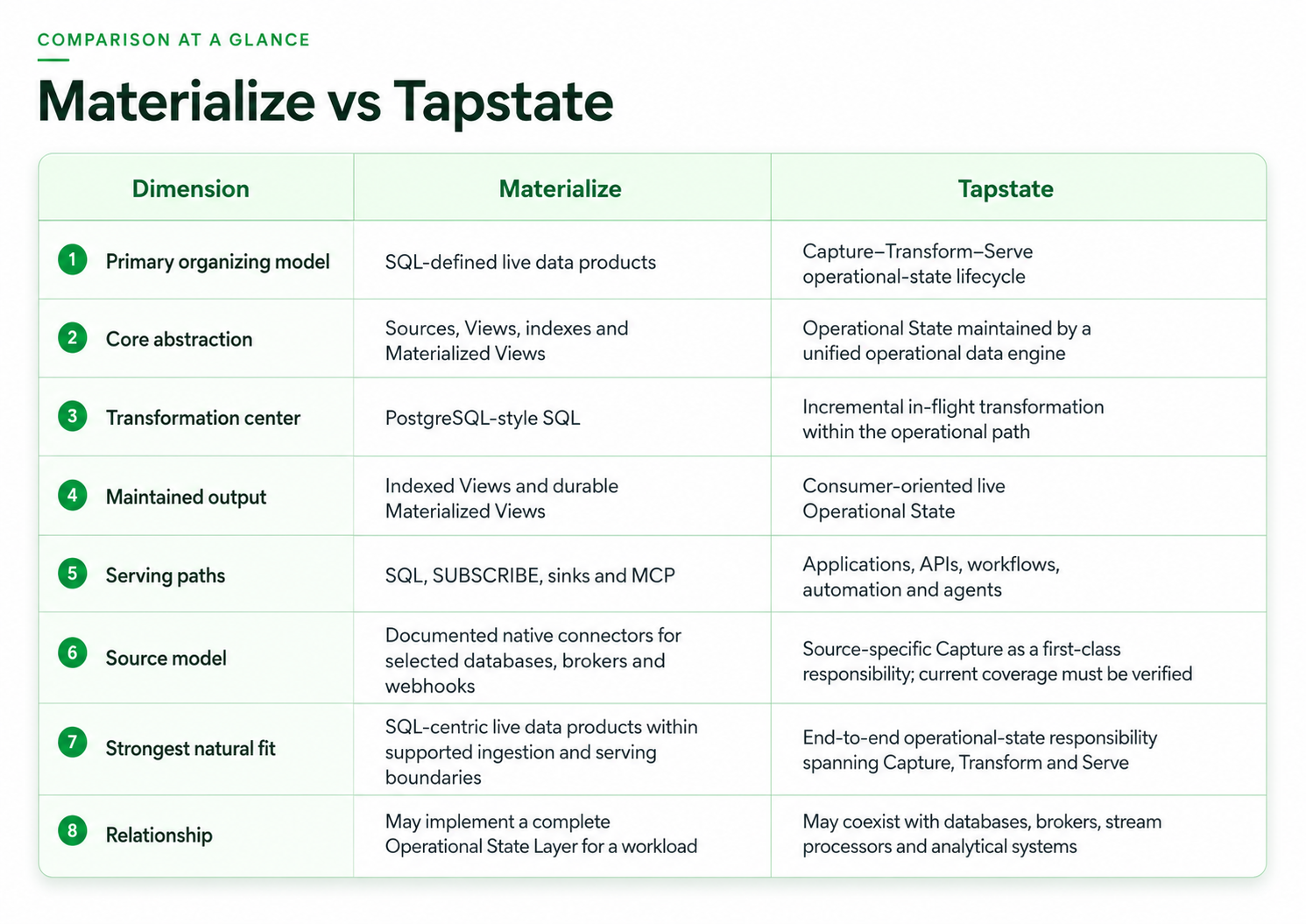
When Materialize is likely the stronger fit
Materialize is a natural choice when:
- the required sources are included in its documented connector set;
- the desired data products can be defined effectively through SQL;
- incremental joins and aggregations are the central technical requirement;
- applications can consume results through SQL, subscriptions, sinks, or MCP;
- the team values Materialize’s documented consistency model;
- source, compute, and serving workloads benefit from independently scalable clusters;
- Materialize’s deployment and operational model fits the organization.
In that situation, Materialize may already be the complete operational-state implementation for the workload. Adding a separate layer merely because the architecture has been given another name would create unnecessary complexity.
When Tapstate is likely the stronger fit
Tapstate is designed for situations where:
- source capture itself is a substantial engineering responsibility;
- the desired boundary begins at operational database changes rather than at tables already available inside a processing system;
- Capture, transformation, state maintenance, and serving need to be treated as one continuous operating lifecycle;
- the goal is reusable cross-system Operational State rather than primarily SQL-defined query products;
- teams want to reduce repeated source-to-serve assembly across multiple consumers.
These are product-design intentions. A production decision must still confirm that the current Tapstate implementation supports the required sources, transformations, serving paths, deployment environment, and reliability guarantees.
Can they work together?
Yes.
Materialize could serve as an incremental computation or maintained-query component inside a broader Operational State architecture.
Tapstate could maintain and deliver operational entities into Materialize when downstream teams want to compose additional SQL live data products.
A Kafka or other event backbone could sit between them.
The correct architecture depends on where the team wants each responsibility to live:
- source capture;
- semantic modeling;
- incremental computation;
- durable state;
- query serving;
- event delivery;
- operational recovery.
Product categories are useful shortcuts. They are not substitutes for assigning those responsibilities explicitly.
A practical decision framework
Before choosing either system, ask:
- Which operational sources must be captured?
- Are those sources supported at the required versions and topologies?
- Is SQL the preferred way to define and manage the resulting business objects?
- Is incremental View maintenance the central problem, or only one part of it?
- Who owns initial load, ongoing changes, recovery, and backfill-to-stream continuity?
- What consistency scope does the application actually require?
- How will results be consumed: SQL, subscriptions, sinks, APIs, workflows, or Agent tools?
- Will several independent consumers reuse the same maintained entities?
- Does the team want independently scaled database clusters or a more unified operational path?
- Which failure and recovery boundaries will the team be responsible for operating?
The answer may be Materialize, Tapstate, both, or neither.
Conclusion
Tapstate and Materialize are worth comparing precisely because the overlap is real.
Materialize is no longer accurately described as merely a system for refreshing Materialized Views. It is a SQL-first live data layer that ingests operational data, maintains reusable business objects, and serves applications and agents.
Tapstate is not simply another way to calculate the same Views. It is organized around maintaining Operational State through a continuous Capture, Transform, and Serve lifecycle.
The choice is therefore not between “a View” and “an Operational State Layer.”
It is between two different centers of architectural gravity:
A SQL-first system for defining and maintaining live data products, and an operational data engine designed to own the state lifecycle from source capture through serving.
For workloads that fit cleanly inside Materialize’s ingestion, SQL, consistency, and serving model, Materialize may already be the complete answer.
For workloads where source-specific capture and the complete source-to-serve lifecycle are themselves the primary problem, Tapstate offers a different product boundary.
That is a real technical distinction—but it should be tested against the actual workload, not accepted from either product’s category label.
FAQ
Is Materialize just a Materialized View database?
No. Materialize provides source ingestion, SQL transformation, incrementally maintained indexed and Materialized Views, direct querying, subscriptions, sinks, deployment options, and MCP access for agents.
Does Tapstate replace Materialize?
Not universally. Their responsibilities overlap, but either system may be sufficient depending on the required sources, transformation model, serving paths, consistency scope, and operational ownership.
Can Materialize implement an Operational State Layer?
Yes. For a workload that fits within its supported ingestion, modeling, state-maintenance, and serving boundaries, Materialize can effectively implement the required Operational State Layer.
Is Tapstate a streaming database?
Tapstate is positioned as a unified operational data engine. Its primary abstraction is the Capture–Transform–Serve lifecycle and the Operational State Layer it maintains, rather than a SQL database interface.