Application modernization is often framed as a replacement problem: move off the mainframe, retire the old ERP, migrate the database, or rebuild the core service. Sometimes that is eventually necessary. But replacement is not the only way to change the architecture around a system, and it is rarely the only thing that makes an application modern.
A more useful question is whether new applications still have to depend on the core at runtime.
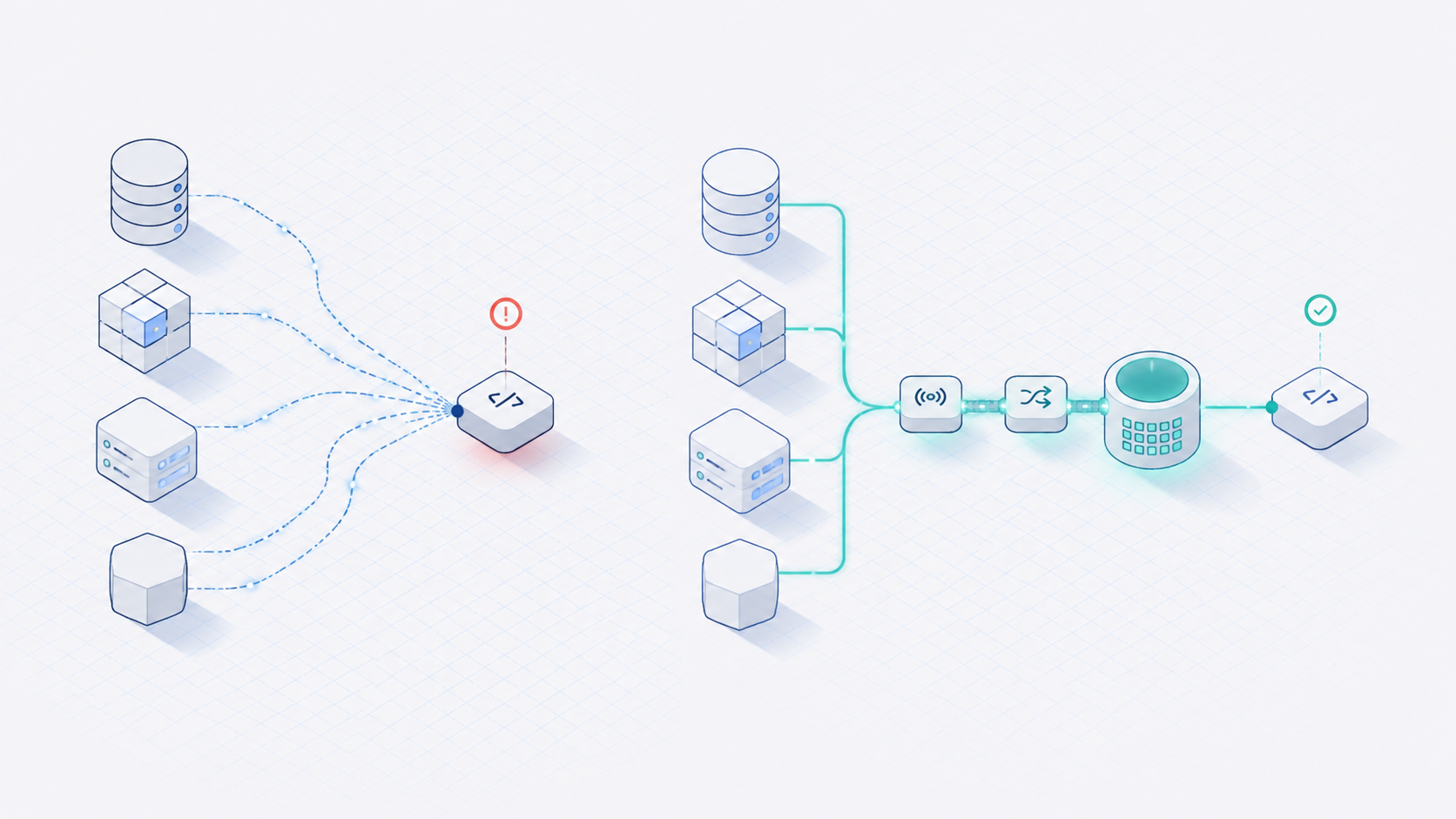
If a mobile application, service console, API, automation workflow, or AI agent must query the system of record directly every time it needs current business context, the old system remains part of every new application’s latency, availability, schema, and release path. The user interface may be new, but much of the operational dependency is not.
That dependency can often be modernized before transaction ownership changes.
Modernization does not have to begin with replacement
Long-lived systems tend to accumulate much more than old code. They contain transaction rules, exception handling, access controls, stored procedures, integrations, reconciliation logic, and operational knowledge built up over years or decades.
Replacing them means reproducing enough of that behavior to move authoritative transactions safely. Large programs can therefore front-load substantial technical and organizational risk before much of the application value becomes visible.
Meanwhile, the surrounding requirements keep moving. Teams still need new APIs, customer-facing experiences, internal tools, automation, and application-ready data models. Waiting for the entire core replacement program to finish can make every downstream initiative inherit the same timeline.
There is another option when the core still performs its transactional role reliably: leave transaction authority where it is, but stop making that system responsible for every new read workload.
This changes the modernization boundary. Instead of asking whether the old system has been removed, ask how much runtime coupling to it has been removed.
Separate transaction authority from application consumption
A system of record and an application read model do not need to be the same thing.
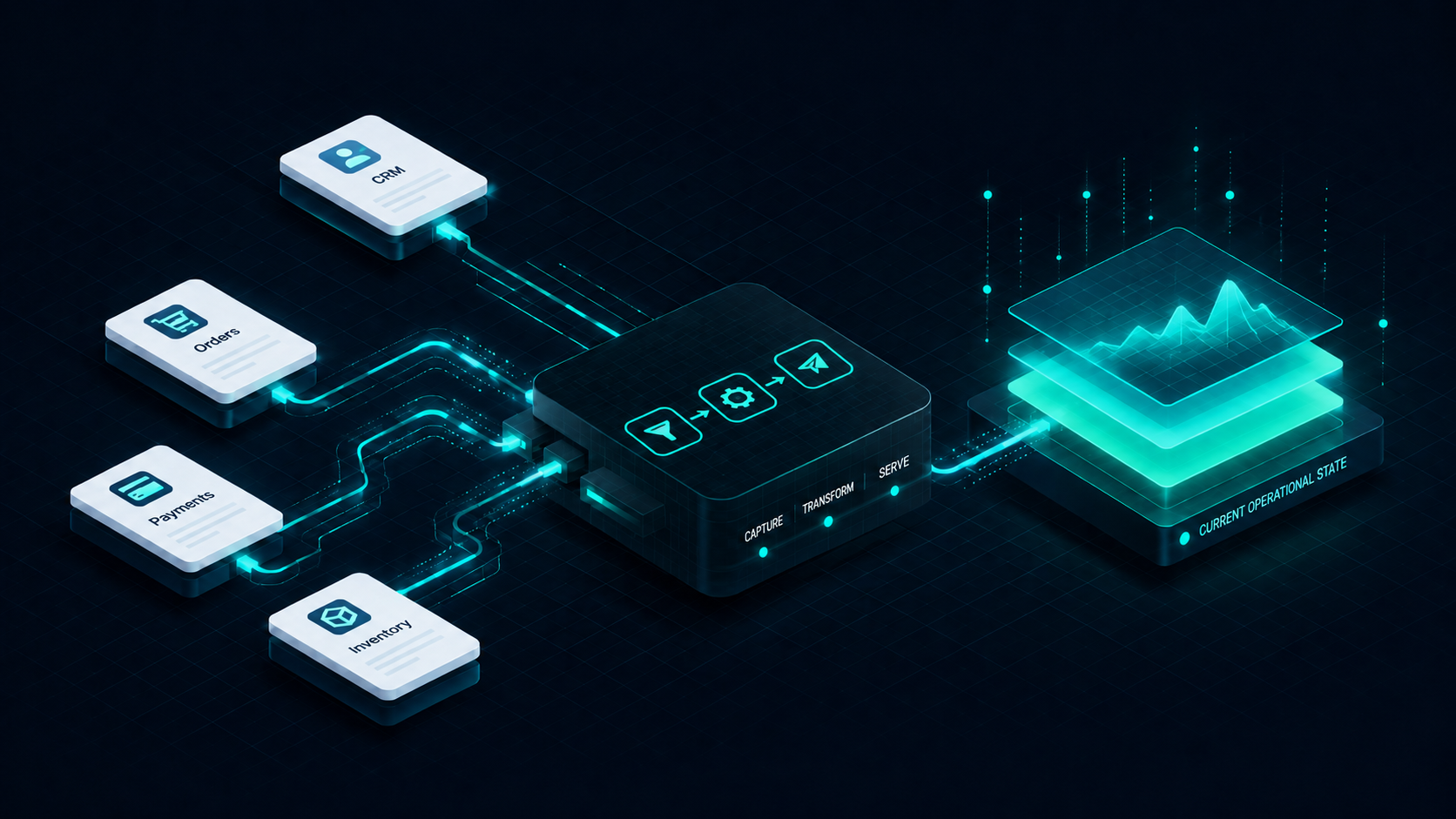
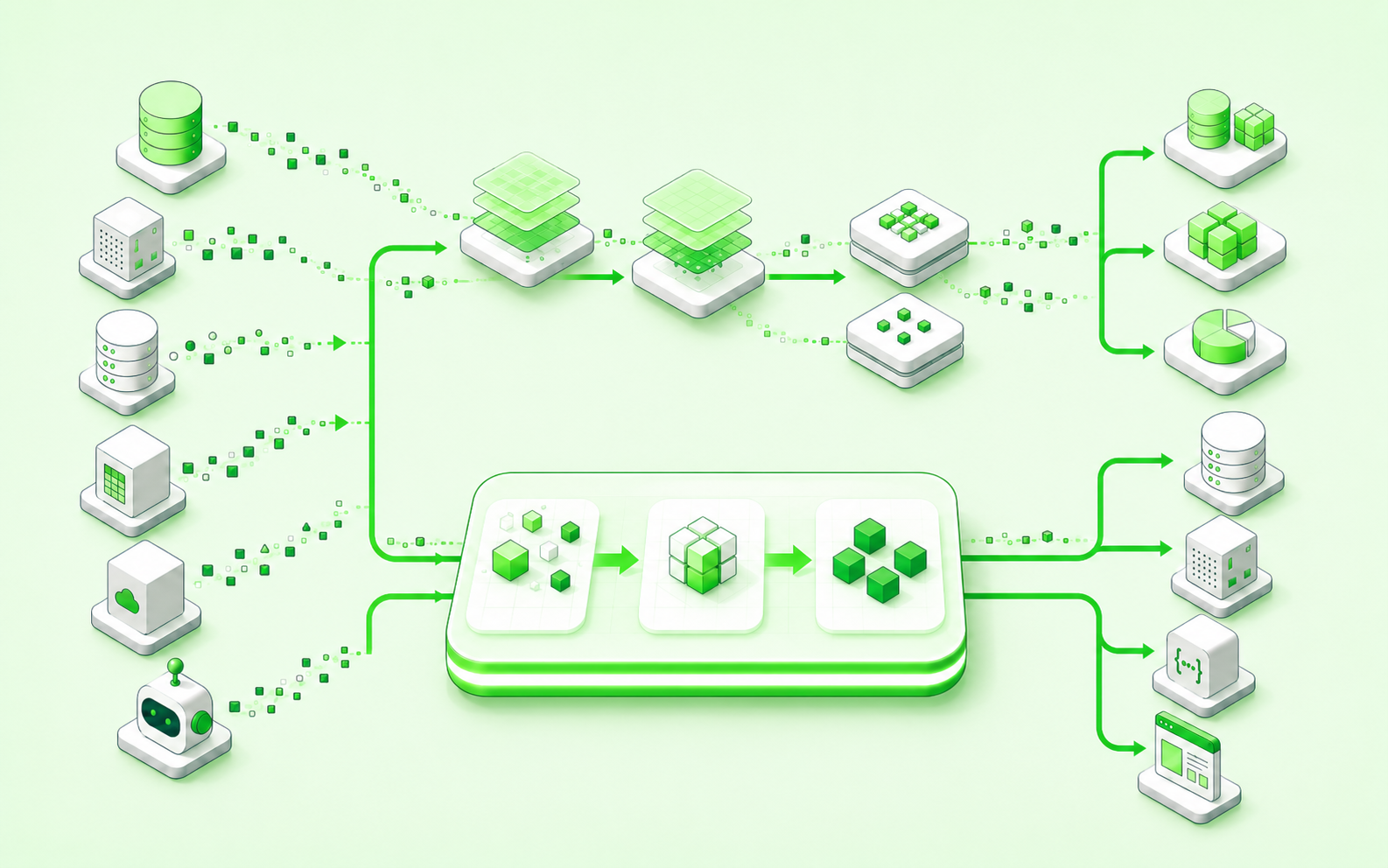
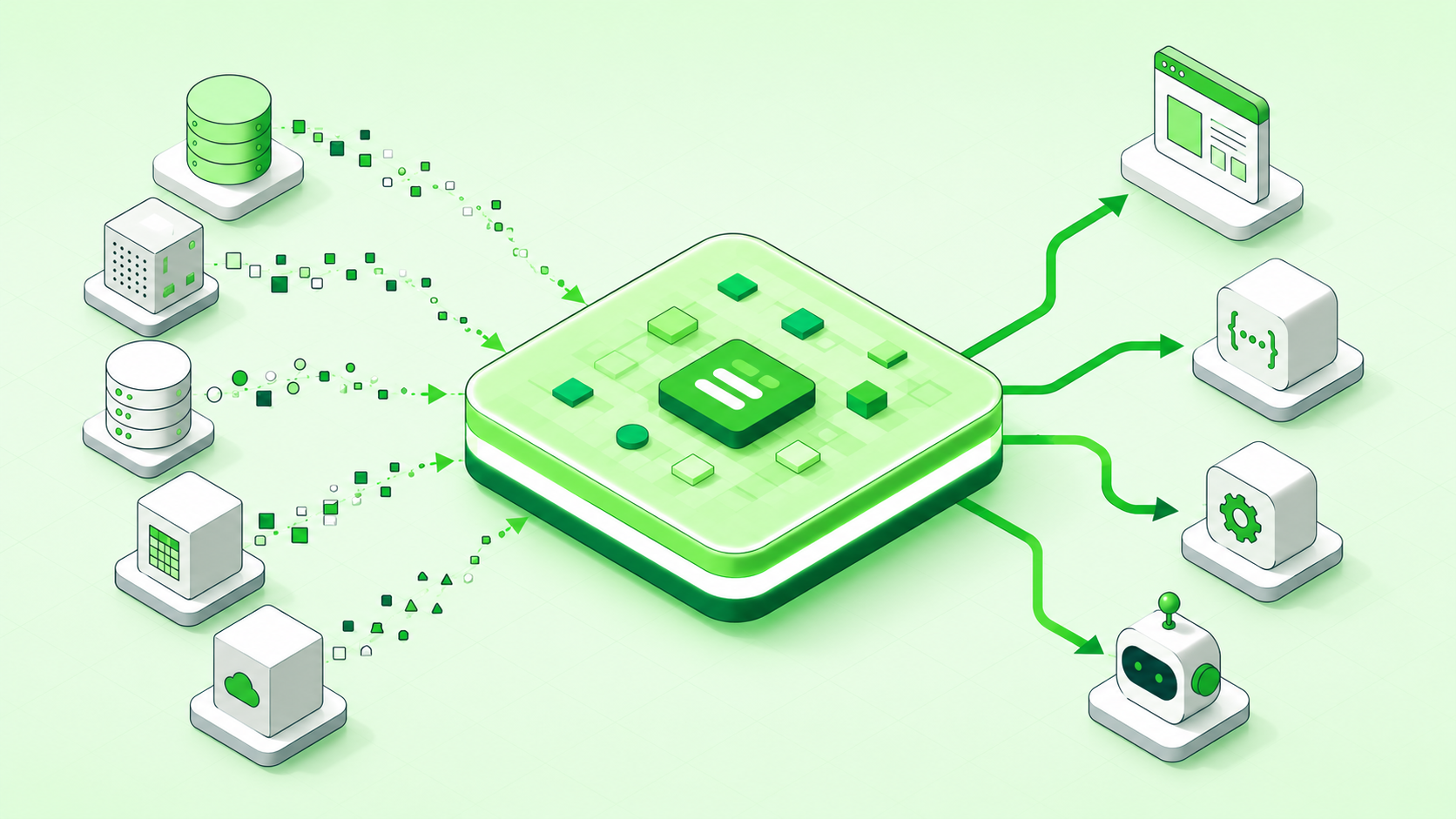
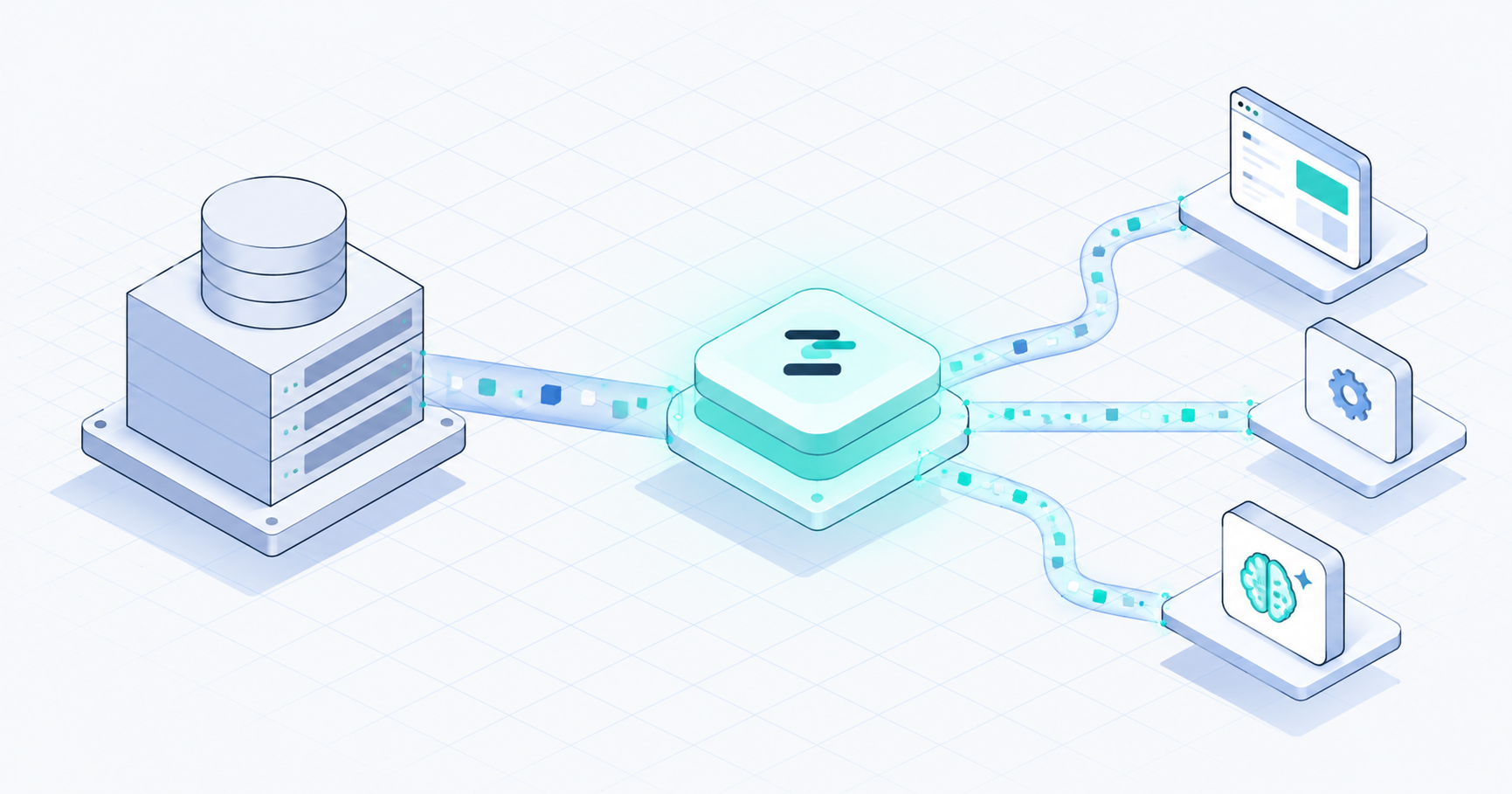
The existing core can continue to own authoritative writes, transaction validation, local consistency, and the official record of committed activity. A separate operational state path can continuously capture those committed changes, combine or reshape them where necessary, and maintain representations designed for downstream consumers.
For example, an account-servicing application may need one view containing customer identity, account attributes, entitlements, recent service status, and selected risk information. The system of record may store those facts across several tables—or several systems—because that structure is appropriate for transaction processing. There is no requirement that the servicing application inherit the same schema.
The important distinction is authority. A downstream representation can be current and application-ready without becoming the authority for the underlying transaction.
That also means the consistency boundary should be explicit. A continuously maintained state layer is not a claim that every downstream field is strongly consistent with every source at every instant. Applications need defined freshness expectations, recovery behavior, and rules for the small set of operations that require authoritative confirmation.
A balance-changing transaction may still need the core. Showing a customer profile, order status, entitlement, or servicing context often does not.
Move an application path, not just a dataset
Modernization programs can create impressive data movement without changing much about the applications themselves.
A team may replicate a large production database, establish CDC, and prove that millions of records are flowing correctly. If no meaningful consumer moves to the new path, however, the original runtime dependency remains.
The first useful milestone is therefore not “the data has been copied.” It is that a real application now serves a meaningful read workload without querying the core.
Start with a bounded domain where the benefit can be measured. Customer profile, account servicing context, product availability, entitlement, and order tracking are usually more suitable than workflows that change authoritative balances or execute tightly coupled transactions.
Before moving the workload, document how the application behaves today. Which queries reach the production system? Which stored procedures or undocumented joins does it depend on? What happens during peak traffic? What latency and freshness does the user experience actually require?
That baseline matters because modernization should remove a dependency, not merely add another system beside it.
Once the new state path is available, move selected reads and measure what changed: production query volume, response latency, release coupling, availability dependencies, and the time required to deliver changes to the consumer model.
The architecture becomes meaningfully different when applications stop needing to understand the legacy system in order to read the business.
Design coexistence instead of treating it as an accident
For most enterprises, there will be a period when old and new applications use different read surfaces. That is not necessarily a transitional failure. It can be a deliberate phase of the architecture.
The important thing is to make the boundary observable.
Each consumer should have a defined source for its reads. Teams should know which fields come from which authoritative systems, how fresh the maintained state is expected to be, and how discrepancies are investigated. Source schema changes also need a clear ownership process so that an apparently local database change does not silently break downstream models.
Controlled dual reads can be useful during migration, but comparison should be semantic rather than blindly byte-for-byte. A consumer-oriented model may intentionally join records, normalize values, remove source-specific fields, or reshape relational data into an application entity. The question is whether the two paths represent the same business meaning, not whether they return identical payloads.
Cutover criteria should also include state correctness and freshness, not only application error rates. An application can continue returning HTTP 200 while serving an incomplete or unexpectedly stale representation.
Fallback deserves the same care. Sending all traffic back to the system of record whenever lag increases may defeat the purpose of offloading and can turn a downstream incident into a production overload.
The right response depends on the workload. Some consumers can temporarily serve slightly older state while exposing its freshness. Others should degrade a feature, fail closed, or use a tightly rate-limited authoritative lookup for specific operations. What matters is that the fallback behavior is designed around business semantics and core capacity before an incident occurs.
Build a seam that survives the eventual replacement
One of the strongest reasons to separate application consumption from transaction authority is that it changes the shape of a future replacement program.
When applications depend directly on legacy tables, database drivers, stored procedures, and source-specific schemas, replacing the core means changing not only the transaction system but also every downstream consumer attached to it.
A consumer-oriented operational model creates a seam between those concerns.
New applications can depend on stable business entities rather than on the physical layout of the existing system of record. If the core is replaced later, the authoritative source behind that state can change while much of the downstream contract remains intact.
This does not make core replacement trivial. Transaction semantics, migration, reconciliation, and cutover still have to be solved. But it reduces the blast radius because the replacement no longer has to drag every read consumer through the same migration at the same time.
The same boundary can also remain useful indefinitely. Some systems of record continue doing their transactional job well for years. There is no architectural requirement that operational offloading must eventually end in replacement.
The better measure is whether the organization has gained freedom to evolve applications independently of the core.
Modernize the dependency before the core
This is the architectural role tapstate is designed to support.
tapstate is a unified operational data engine that captures committed database changes, transforms and consolidates them continuously, and maintains application-ready operational state for downstream consumption. The system of record keeps transaction authority; applications gain a separate state path that no longer requires every read to return to the core.
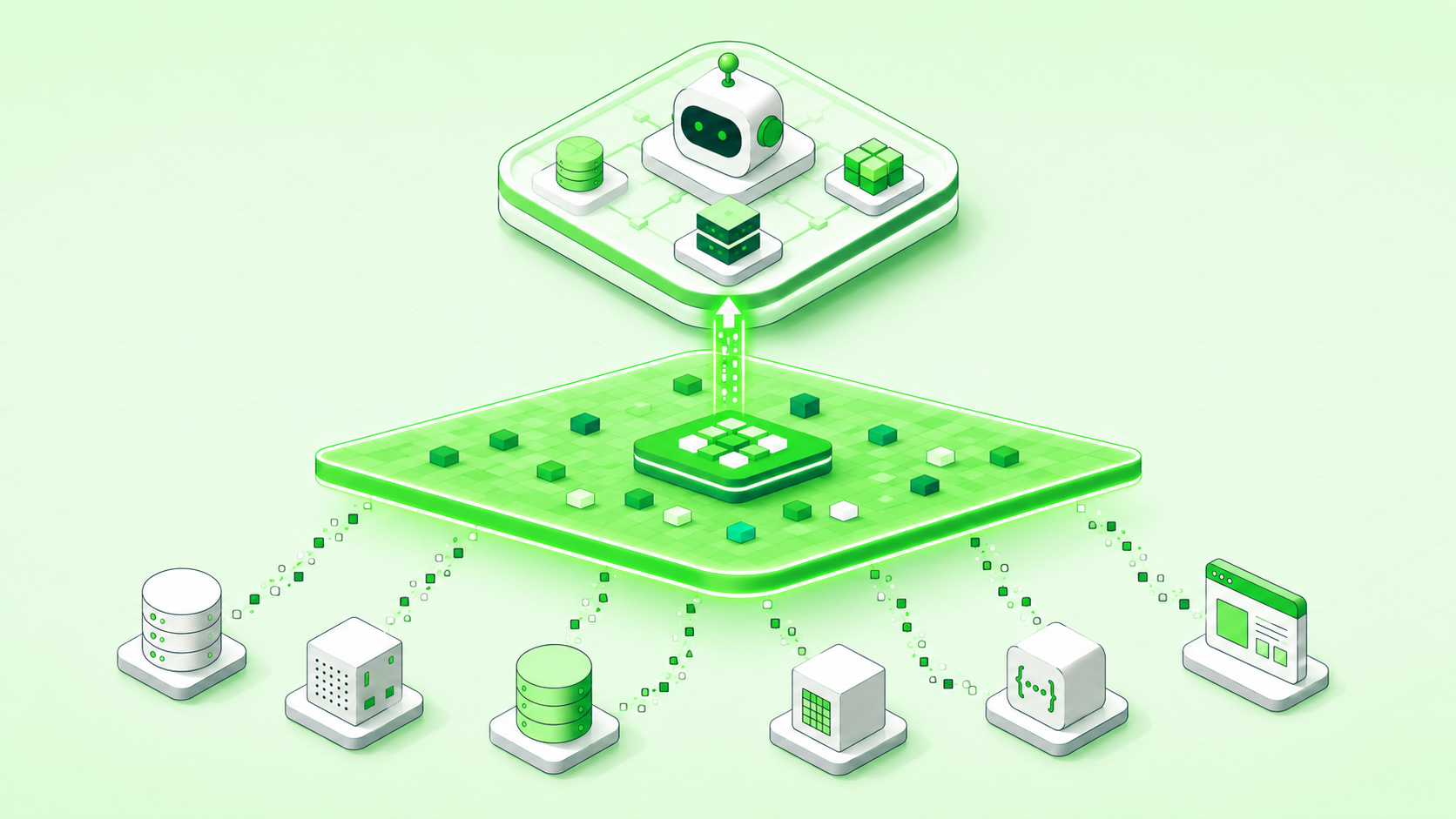
The result is an Operational State Layer between production systems and the applications, APIs, automation, and agents that need to know what is true now.
That layer should not become a shadow transaction system. Writes that depend on the core’s business rules still belong with the authority that owns them. The value comes from removing unnecessary read and integration coupling while preserving that ownership boundary.
Production readiness also depends on more than seeing a database name in a connector catalog. Database version, topology, permissions, capture mechanism, recovery behavior, and known limitations all affect whether a change path is suitable for a particular system. Initial load and incremental capture should behave as one recoverable continuum, and teams should know how the maintained state will be rebuilt when something goes wrong.
Those are not separate concerns from application modernization. They determine whether the new application dependency is actually safer than the one it replaced.
Replacing a system of record may still be part of the long-term roadmap. But applications do not need to wait for that project before they become easier to build, operate, and evolve.
Modernize the dependency first. The decision about the core can then happen on its own timeline.
Modernize the read path first.
See how Tapstate can keep operational state continuously current outside the system of record—without changing transaction ownership.