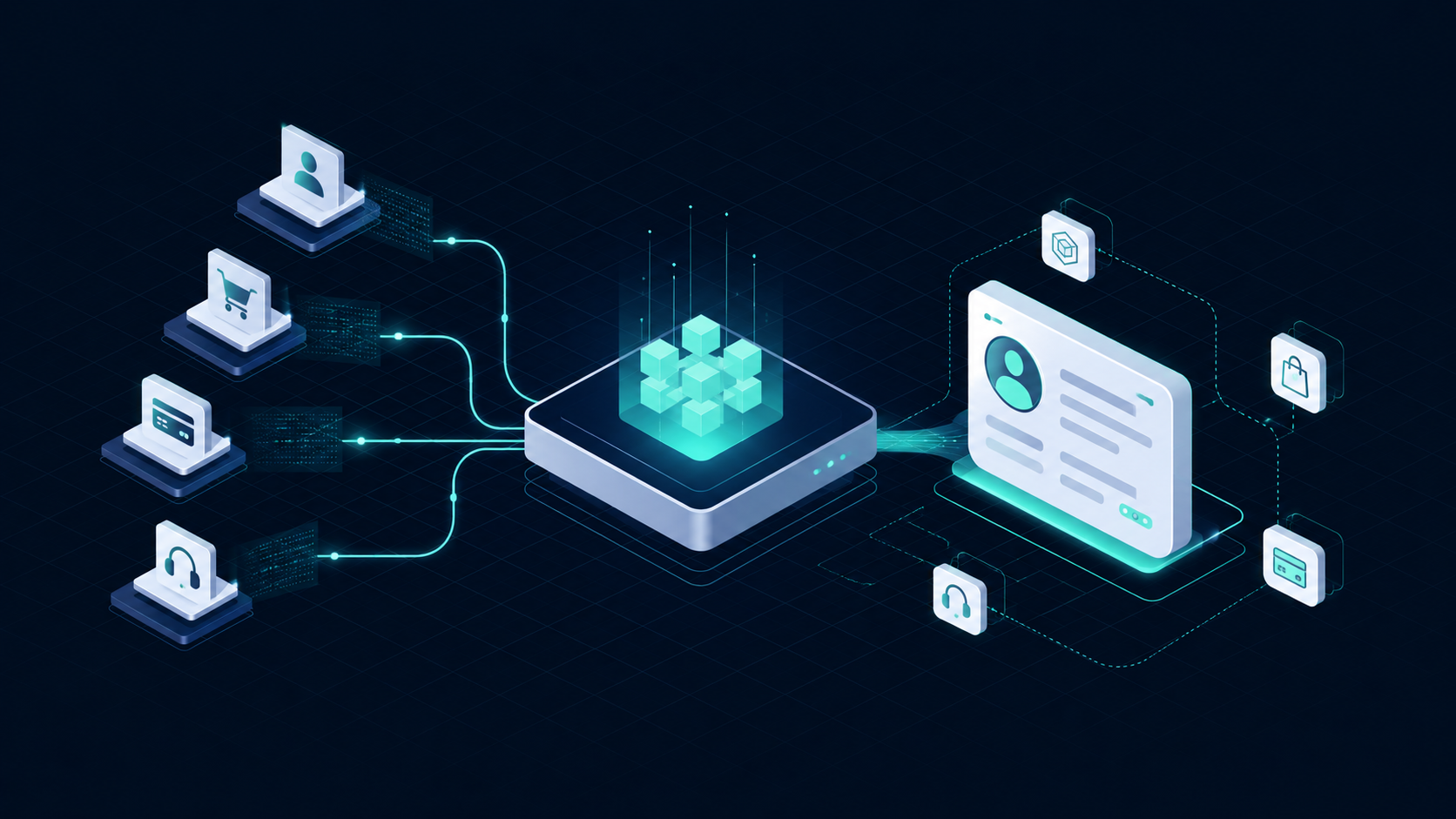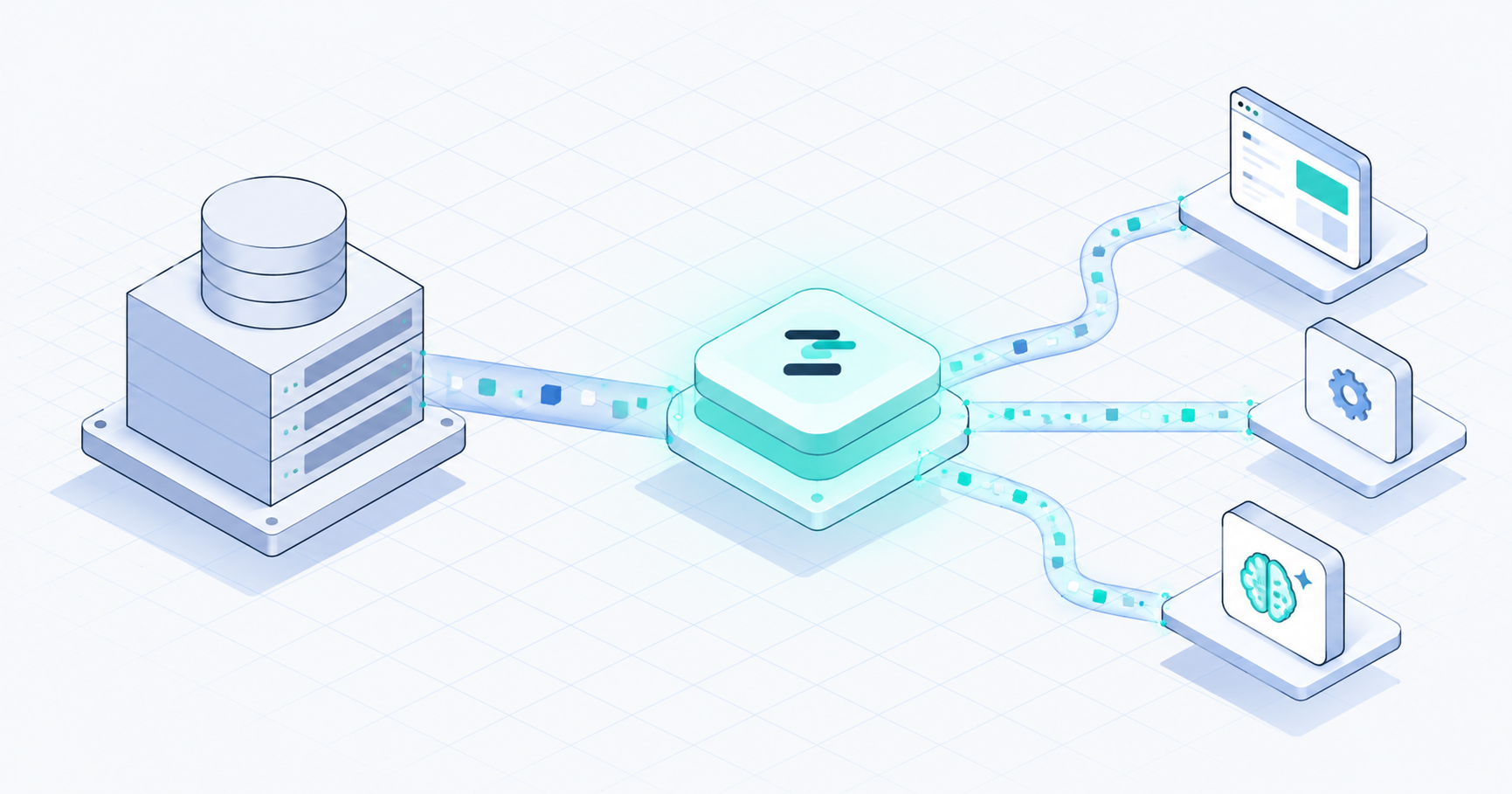
Production databases are built to run the business. Over time, however, more consumers begin asking the same systems for data: digital applications, internal tools, customer-service workflows, APIs, reporting systems, automation, and AI applications.
A common response is to create another copy of the database and move those reads elsewhere.
That can protect the primary database. But it introduces a second question:
How do you keep the offloaded data current, trustworthy, and useful without turning every downstream application into another synchronization project?
The practical answer is to treat database offloading as more than replication.
A durable offloading architecture establishes a baseline outside the system of record, continuously captures committed changes, reshapes those changes for downstream use, maintains current state incrementally, and preserves enough progress and recovery context to keep that state usable after interruptions.
That is the difference between copying a database and offloading an operational workload.
What is operational database offloading?
Operational database offloading moves secondary read and data-serving workloads away from a production system while the original database remains authoritative for its transactions and business rules.
The goal is not necessarily to replace or migrate the production database.
Instead, the goal is to change how the rest of the business depends on it.
A core Oracle, Db2, SQL Server, AS/400 / Db2 for i, or other operational system may continue running critical transactions while a separate data path supplies current data to new consumers.
Read replicas are one established way to do this. Database vendors and cloud platforms commonly recommend replicas for moving reporting or other read-heavy workloads away from a primary database.
But a replica is only one form of offloading.
When downstream consumers need a different schema, selected entities, transformed records, a heterogeneous destination, or a reusable operational model rather than another source-shaped database, the problem becomes broader than read scaling.
Why periodic copies become stale
A snapshot answers:
What did this database look like when the copy was taken?
It does not automatically answer:
What is true now?
If a full export runs every hour, the downstream system can be almost an hour behind before the next run begins. Increasing the frequency reduces that window, but repeatedly scanning production tables can also increase cost and source-system load.
Change Data Capture changes the model.
Instead of repeatedly asking the source for the entire current dataset, CDC captures incremental inserts, updates, and deletes as the source changes. Log-based CDC typically reads database transaction logs rather than repeatedly querying application tables, which is why it is widely used when teams need fresher downstream data with limited impact on primary workloads.
But CDC alone still gives downstream systems changes.
An application usually wants state.
That distinction matters.
A sequence such as:
order created
payment received
shipment dispatched
address corrected
shipment delivered
is useful as an event history.
But most operational applications ultimately need to ask: What is the current state of order 10482?
The offloading architecture therefore needs to do something with captured change—not merely transport it.
Read replica vs. CDC vs. operational offloading
These approaches solve related but different problems.
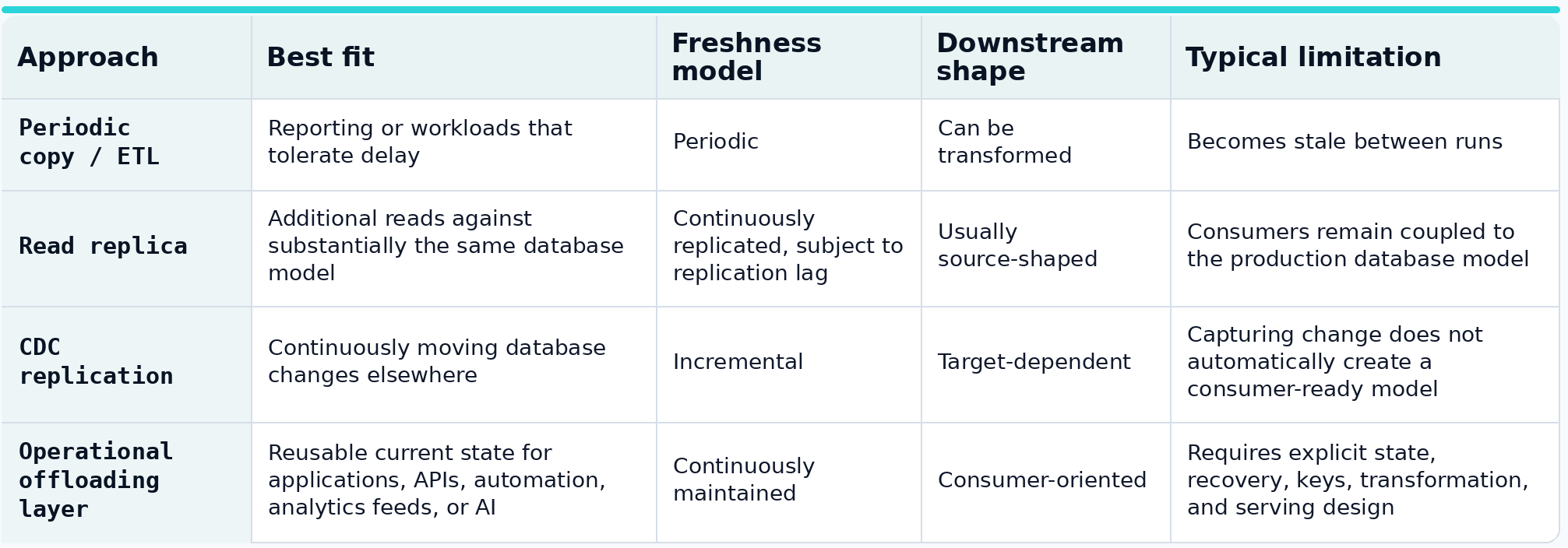
Read replicas remain an excellent choice when the requirement is simply:
“I need more read capacity for this database.”
CDC becomes more useful when teams need selective replication, heterogeneous destinations, or a downstream system with a different purpose. PostgreSQL logical replication, for example, can selectively replicate tables or rows and feed non-PostgreSQL consumers rather than creating only another physical copy of the same system.
Operational offloading goes one step further:
The destination is designed around what downstream consumers need, not around reproducing the source database as faithfully as possible.
A practical architecture for operational offloading
A useful offloading path has five responsibilities.
1. Keep the system of record authoritative
Offloading should reduce dependency on the production system, not create confusion over ownership.
The original operational database continues to own its transactions, business rules, and authoritative source-side state.
The offloaded environment exists for downstream consumption.
Tapstate's architecture follows this boundary explicitly: systems of record remain authoritative while the maintained downstream state serves new consumers.
2. Establish a baseline, then continue from change
Before a downstream system can remain current, it needs an initial representation of the data.
For a continuous source, the basic lifecycle is:
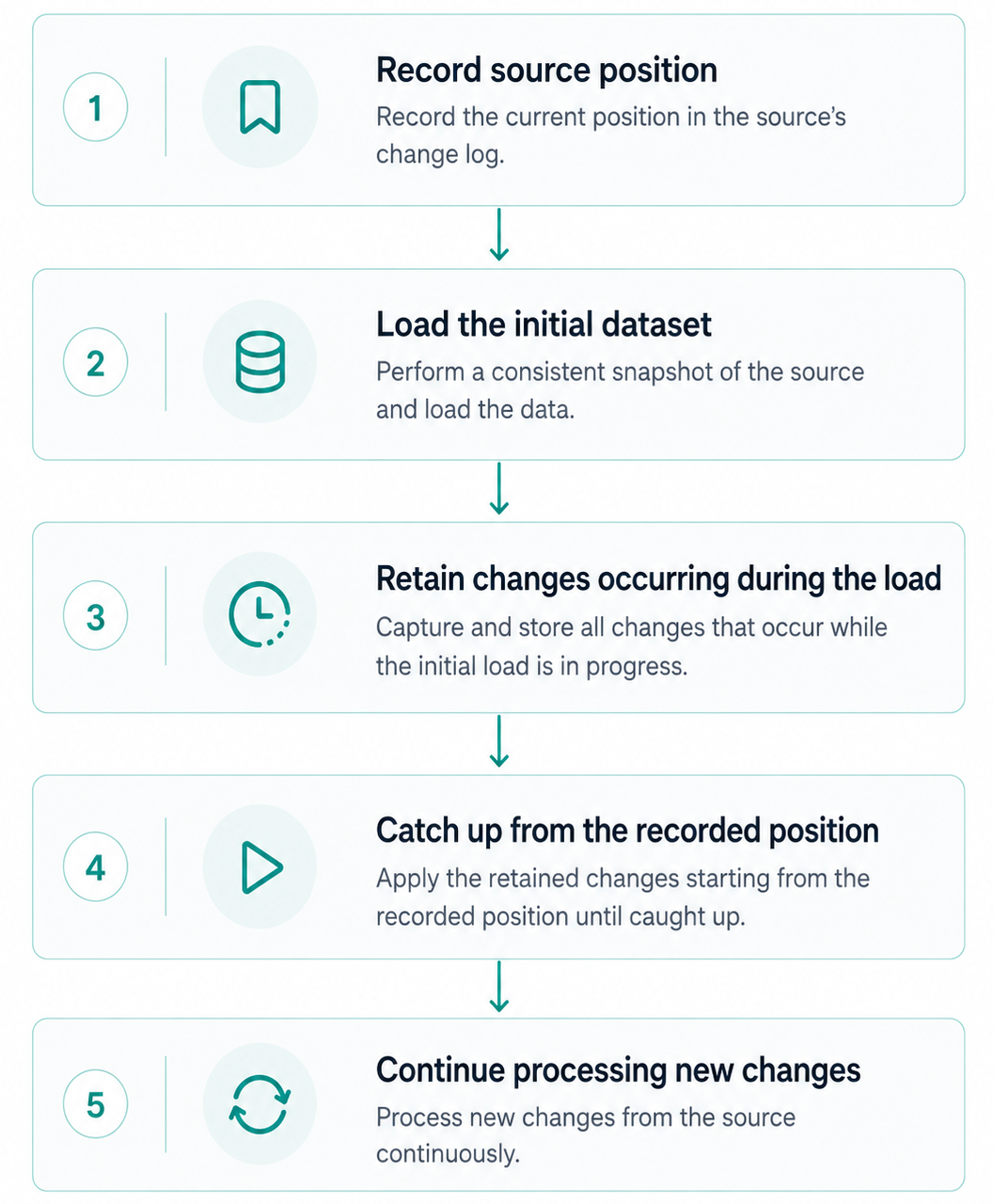
This transition is one of the most important parts of CDC engineering.
Production CDC guidance consistently identifies the initial snapshot as a distinct operating phase, because large source databases can make the initial read materially different from steady-state streaming.
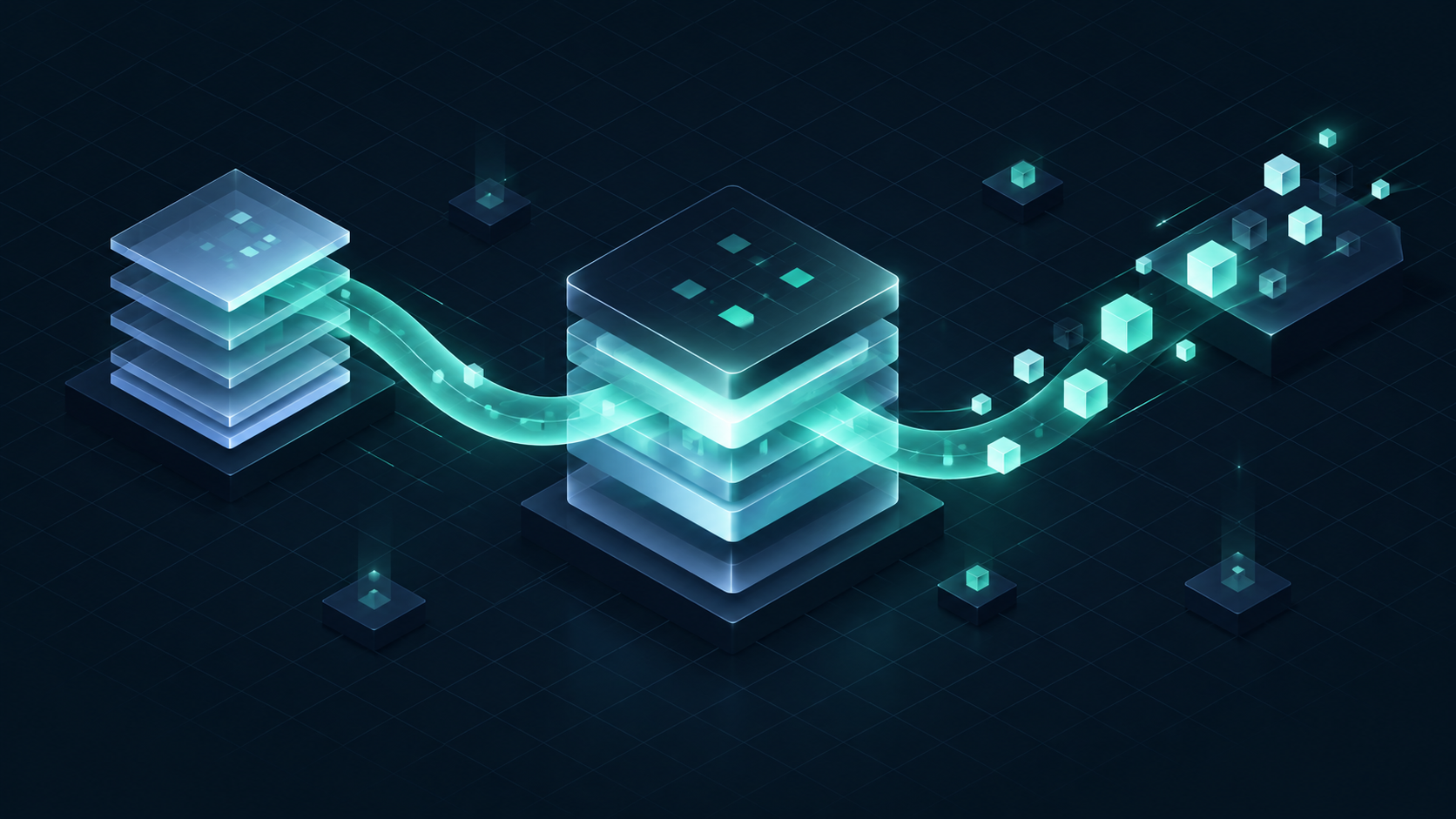
Tapstate models the same lifecycle explicitly: supported continuous capture begins from a connector-defined baseline, records source progress, retains later source activity where supported, catches up, and then continues with ongoing changes.
The important principle is:
The initial copy and the change stream must belong to one continuity model.
Otherwise, a “fresh copy” can contain a gap before continuous replication has even begun.
3. Reshape source data before serving it
A production schema is optimized for the application that owns it.
A downstream consumer often wants something different.
An order application may store current business context across:
- order tables,
- payment tables,
- shipment tables,
- customer records,
- fulfillment status,
- support data.
Copying each source table into another database reduces read pressure, but it leaves every downstream consumer responsible for reconstructing that context again.
Operational offloading can instead introduce transformation before serving:
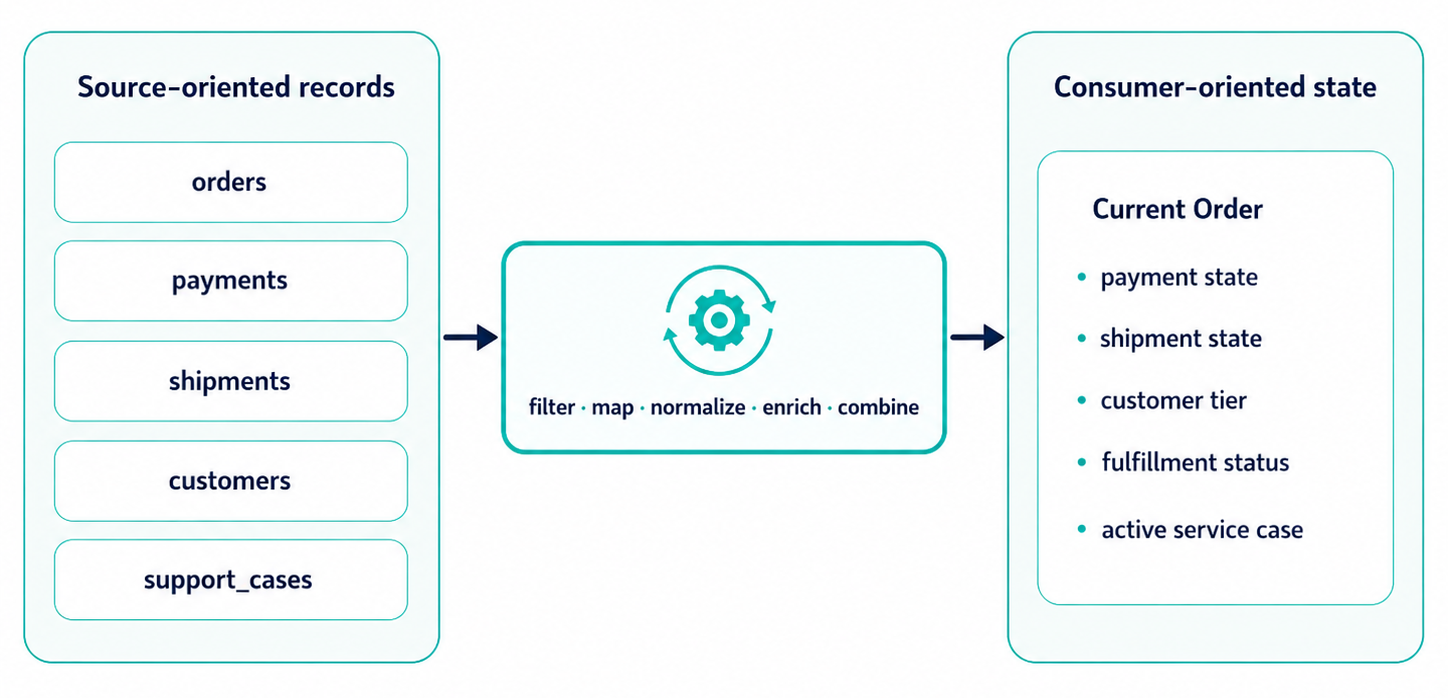
This is a central distinction in Tapstate's Operational State model: data is not only current and continuous, but also curated around the consuming workflow rather than exposed only as raw source schemas.
Northstar makes the same design principle explicit: moving records alone does not create usable Operational State; current downstream state can also require normalization, joins, identity handling, incremental maintenance, and serving.
4. Maintain state instead of replaying history at read time
CDC produces a stream of change.
Operational consumers often want the latest representation of an entity.
A state-maintenance layer applies each accepted change to the maintained result:
T0
customer.c-104
tier = standard
balance = 960

T1
balance → 1280

T2
tier → premium

CURRENT STATE
customer.c-104
tier = premium
balance = 1280
This means the application does not need to replay every historical change each time it asks what is true now.
Tapstate describes Serve this way: transformed records are written or materialized into maintained current state, and later accepted changes advance the same representation.
This is where operational offloading starts to become reusable infrastructure rather than simply another replica.
5. Treat recovery as part of freshness
Freshness is not only a latency question.
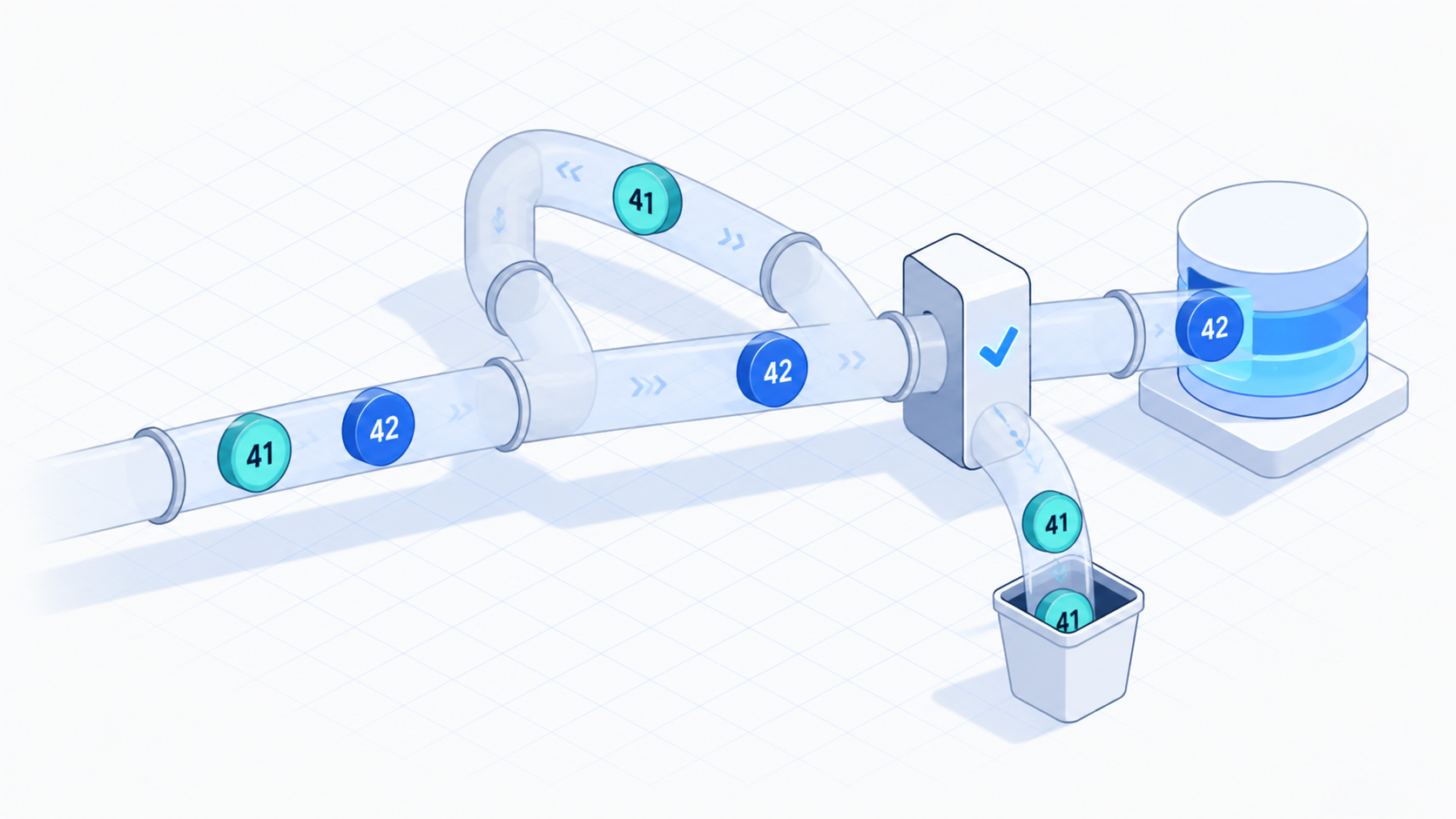
A downstream copy can be fast while everything is healthy and still become untrustworthy after an interruption if the system cannot determine where processing stopped.
A production offloading design therefore needs explicit answers to questions such as:
- What source position has been processed?
- How long does the source retain the history needed to resume?
- What happens after a connector restart?
- How are retries handled?
- What happens to deletes?
- Which key identifies the maintained downstream record?
- What happens when the source schema changes?
- How do operators know whether the target is caught up?
Tapstate's architecture retains positions, checkpoints, mappings, status, and recovery context across the data path so execution can resume according to the capabilities of the connector and target rather than guessing where processing stopped.
There is an important limitation here:
A checkpoint cannot preserve source history that the source database has already discarded.
For log-based CDC, the required binlog, WAL, redo, oplog, or equivalent history must remain available long enough for recovery. Tapstate therefore treats retention and connector-specific recovery boundaries as part of the Capture contract rather than promising universal resume semantics.
“Current” does not mean “zero lag”
A useful operational offloading design should avoid vague claims such as “the copy is always perfectly real-time.”
Every continuous architecture has a freshness boundary.
Latency can be introduced by:
- source log availability,
- capture processing,
- transformation,
- network transport,
- target writes,
- retries,
- downstream system pressure,
- replication lag.
The correct design question is therefore not:
Is the target real-time?
It is:
How fresh does this workload need to be, and can the complete source-to-serving path meet and expose that requirement?
For a reporting dashboard, minutes may be acceptable.
For an operational API, seconds may matter.
For a workflow making an immediate decision, stale or partially updated state may be unacceptable even when the average latency looks good.
Freshness should therefore be treated as an observable operating property, not a marketing adjective.
Offload the workload, not just the rows
This is the point where operational offloading differs from basic replication.
A second database full of source-shaped tables can reduce load on the first database.
But every new consumer may still need to:
- understand the original schema,
- build joins,
- map IDs,
- normalize fields,
- handle deletes,
- reconstruct current entities,
- operate its own refresh logic.
The infrastructure burden has simply moved downstream.
A reusable offloaded operational layer changes the goal.
Instead of asking:
“How do we copy these tables?”
ask:
“What current state do these consumers repeatedly need, and how do we maintain it once?”
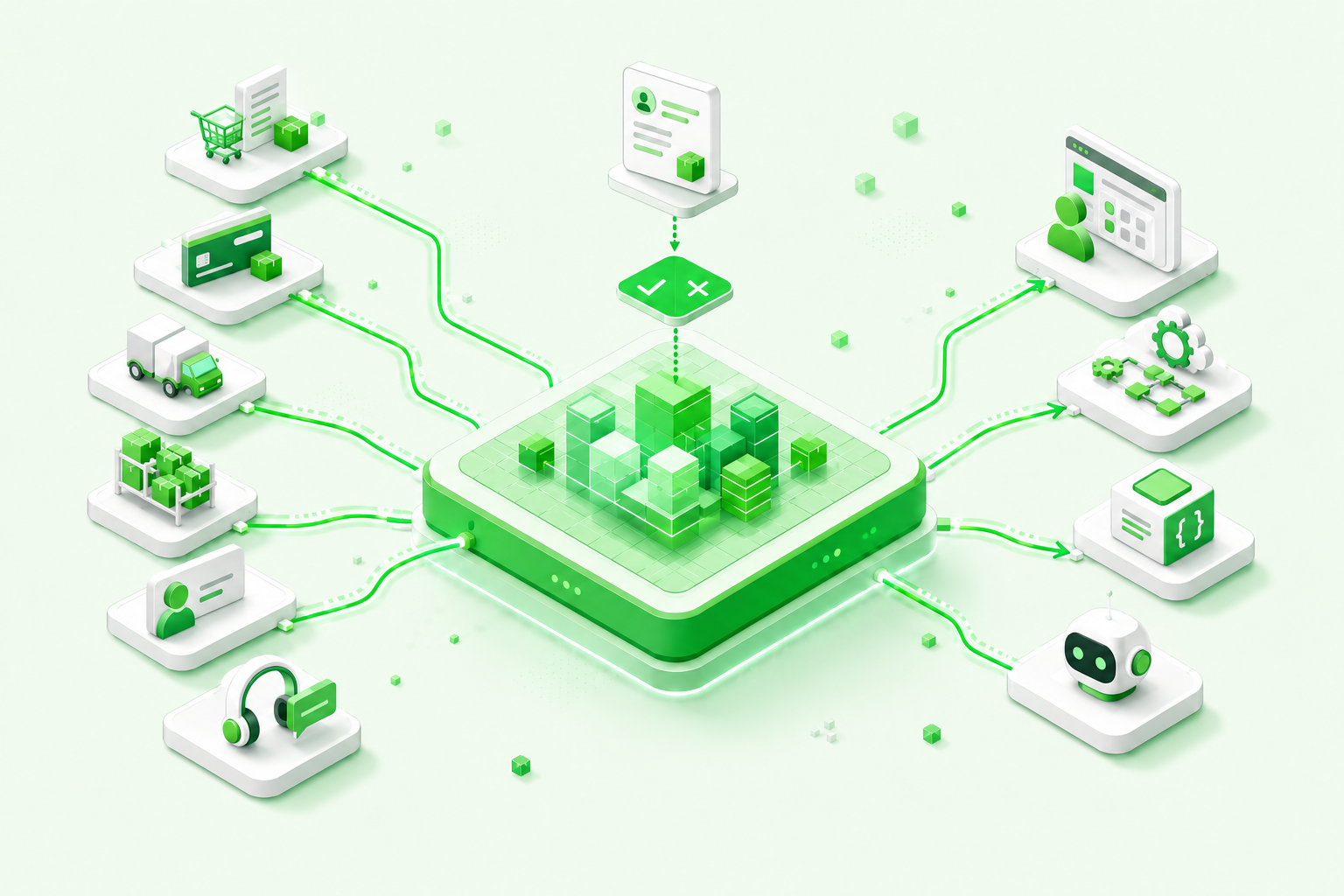
Tapstate's published Core System Offloading pattern uses exactly this distinction: Capture change, shape records, and maintain current state outside the system of record so that applications, APIs, event platforms, analytics, automation, and other consumers can reuse the maintained layer.
That makes offloading useful for more than reporting.
What can an offloaded operational layer support?
Once current data is maintained outside a protected production system, the same foundation can support several workloads.
Operational APIs
Services can read current operational data without reopening direct query access to the system of record for every new API.
Customer or account state
Data from multiple operational systems can be maintained as a current, consumer-oriented customer or account representation.
Analytics and event feeds
Maintained operational data can continue downstream to analytical platforms, Kafka, MQ, or other existing infrastructure where those systems remain appropriate.
Automation and AI
Applications and agents can consume maintained current business context rather than independently querying and reconciling several protected systems.
Tapstate's offloading architecture explicitly presents these as extensions of the same foundation rather than mutually exclusive destinations.
When should you use a read replica instead?
Operational offloading should not replace a simpler architecture when the simpler architecture already solves the problem.
A read replica is usually the more direct choice when:
- consumers need substantially the same schema as production;
- the database engine already provides suitable replication;
- read scaling is the primary requirement;
- consumers can tolerate the replica's lag characteristics;
- no significant cross-system transformation is required.
An Operational Data Platform becomes more relevant when several of these conditions appear together:
- the source system must remain in place;
- downstream demand keeps growing;
- different consumers need different models;
- direct production access is constrained;
- data must remain continuously current;
- multiple systems contribute to one operational entity;
- new applications should not each rebuild their own CDC and serving path.
The two patterns are not competitors in every situation.
They solve different levels of the problem.
Where tapstate fits
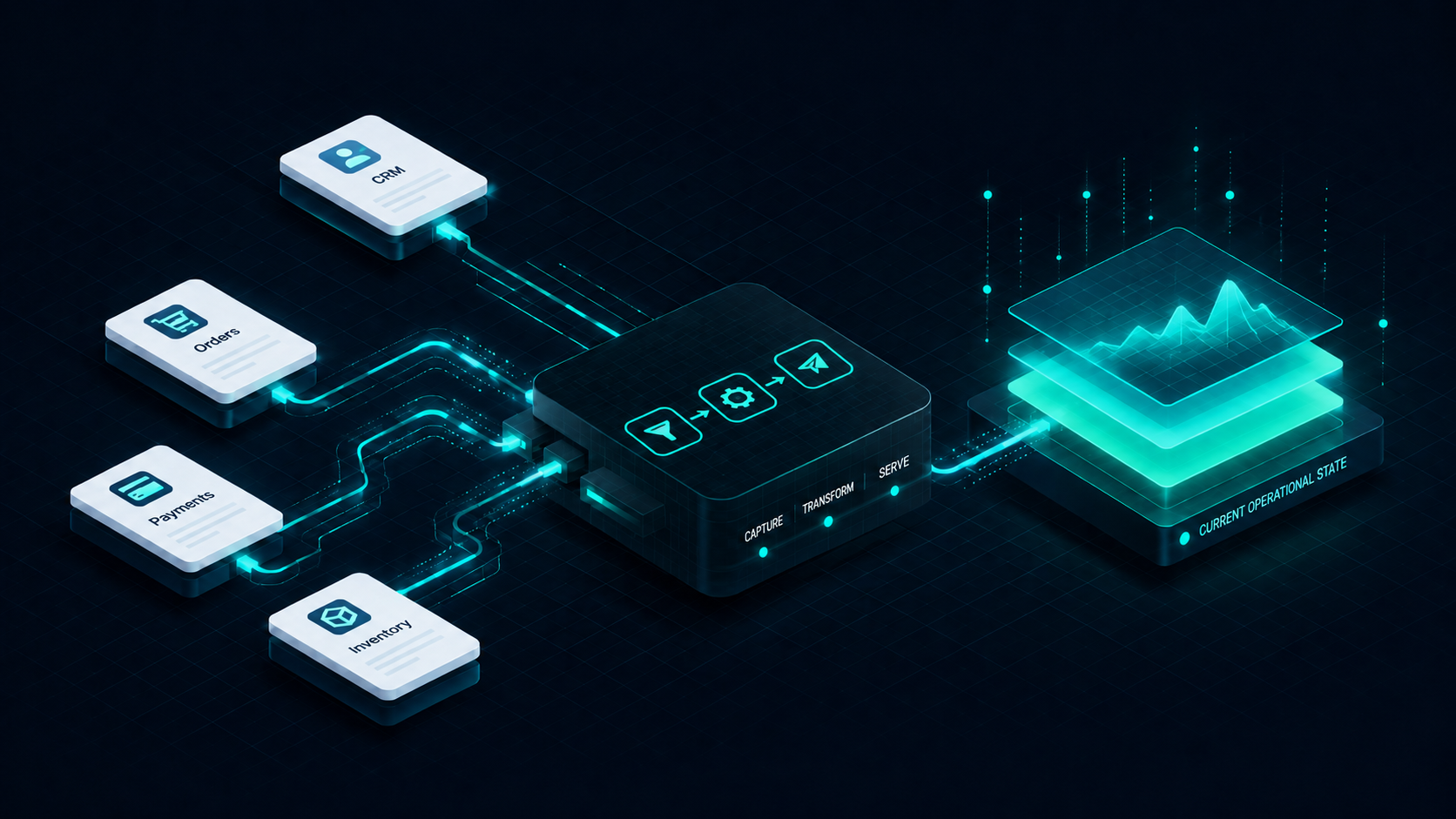
tapstate is an Operational Data Platform designed around a single Capture → Transform → Serve operational data path.
For an offloading use case, that means:
Capture
Establish the supported baseline and, where the connector allows it, continue from committed source changes.
Transform
Filter, normalize, enrich, reshape, and route records as they move.
Serve
Materialize or deliver maintained current state through supported targets.
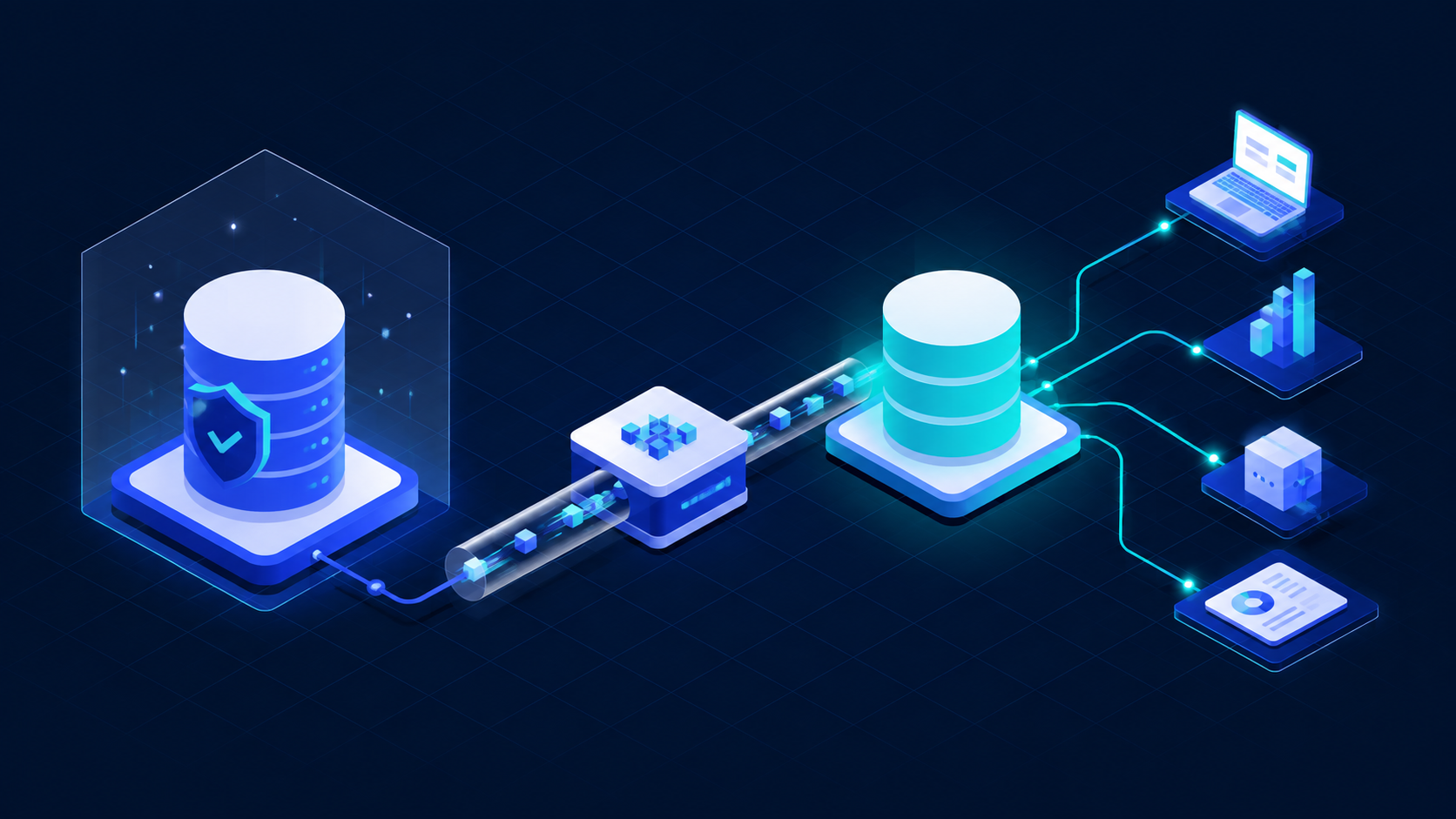
The result is an Operational State Layer between systems of record and the applications, APIs, automation, analytics, and AI consumers that need current data.
The source remains authoritative. The offloaded state exists to make that source data reusable without forcing every downstream workload back onto the core system.
Connector behavior remains source-specific. Capture mode, source preparation, log retention, resume behavior, target semantics, and known limitations should always be checked against the connector documentation rather than inferred from the database name alone.
A database offloading design checklist
Before implementing an offloaded operational path, answer these questions explicitly:
- What remains authoritative?
Identify the system that continues to own transactions and business rules. - Which workloads are actually being offloaded?
Reporting, APIs, application reads, customer state, AI context, or something else? - What freshness does each consumer require?
Define an acceptable source-to-serving delay rather than simply asking for “real time.” - Does the consumer need source-shaped tables or a different model?
This often determines whether a read replica is enough. - How is the initial baseline connected to ongoing change?
Make the snapshot-to-CDC transition explicit. - How are keys, deletes, schema changes, and transformations handled?
These determine whether the maintained state remains correct over time. - What is the recovery window?
Verify how long the source retains the history required to resume from the recorded position. - How will freshness and correctness be observed?
A pipeline being “up” does not automatically mean the served state is current. - Can the maintained result be reused?
The architecture becomes more valuable when the second, third, and fourth consumers do not rebuild the same state-management logic.
Frequently asked questions
What is database offloading?
Database offloading moves secondary workloads away from a production database while the original system continues to own authoritative transactions. The offloaded environment may be a read replica, analytical destination, or a continuously maintained operational layer depending on what downstream consumers need.
Is a read replica a form of database offloading?
Yes. Read replicas are a common way to offload read-heavy workloads from a primary database. They are particularly effective when consumers need largely the same database model. Operational offloading becomes broader when data must be transformed, combined, selectively replicated, or served through a different downstream model.
Is CDC required for operational database offloading?
Not always. Batch exports or native replication may be sufficient when freshness requirements are relaxed. When downstream data must remain continuously current and the source supports it, log-based CDC is a common mechanism because it captures incremental committed changes instead of repeatedly scanning the full source dataset.
Does CDC eliminate stale data?
CDC can substantially reduce the delay created by periodic batch copies, but it does not create a universal zero-lag guarantee. Freshness still depends on capture, processing, network, target, retry, and source-retention behavior. A production architecture should define and observe the freshness requirement explicitly.
Is database offloading the same as database migration?
No. Migration normally aims to move responsibility from one system to another. Offloading can leave the original system in place indefinitely while moving selected reads or downstream consumption elsewhere. Tapstate explicitly distinguishes source-system offloading from a generic “move anything anywhere” database migration product.
When is a warehouse enough?
A warehouse or lakehouse remains the natural destination when the primary goal is historical analysis, reporting, aggregation, or data science. An operational layer becomes more relevant when applications and workflows need continuously maintained present-time state for action.
The key idea
Protecting a production database is only the first half of offloading.
The second half is making sure the data outside that system is actually usable.
A durable pattern therefore looks like this:
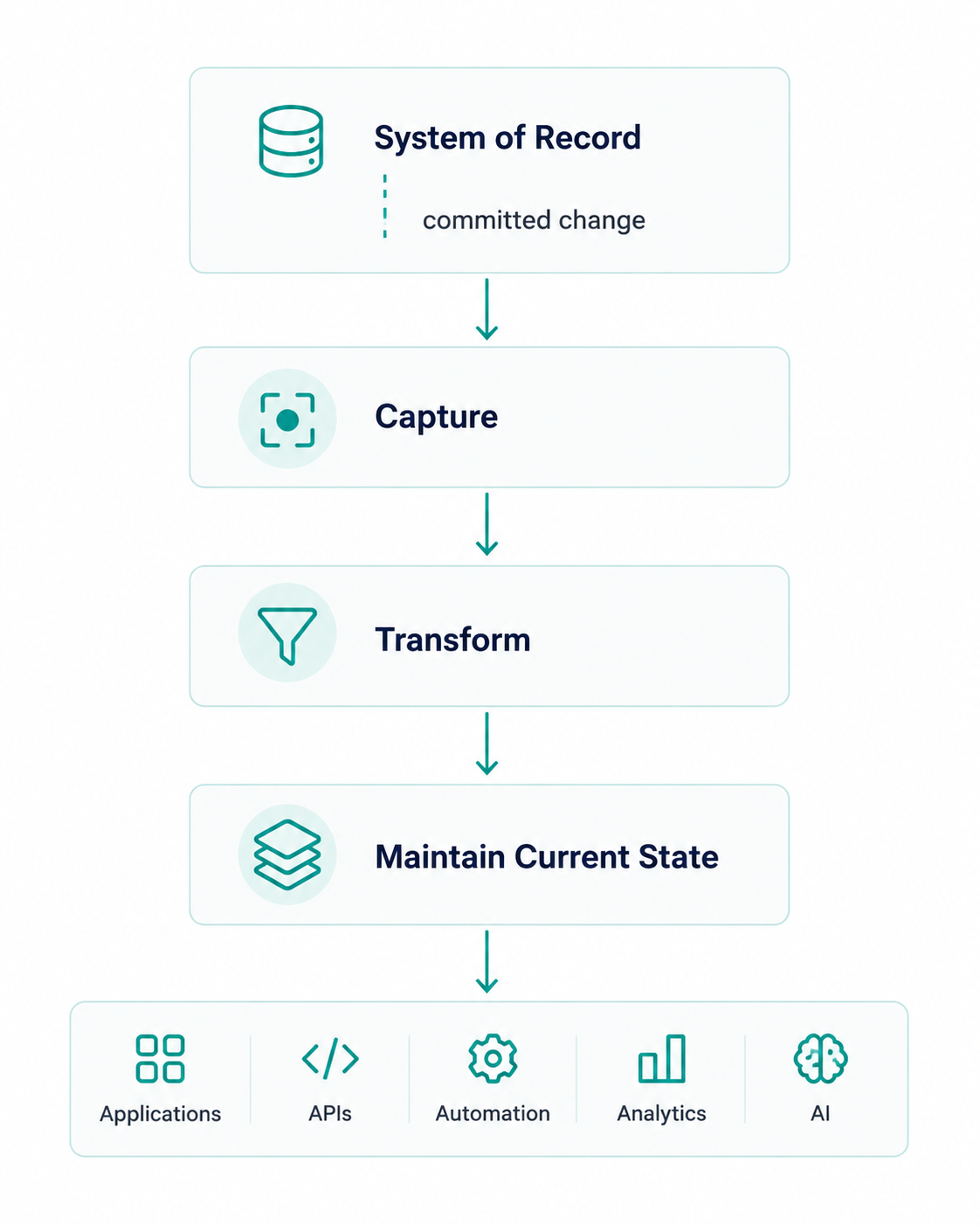
The system of record keeps doing the job it was built to do.
The rest of the business gets a continuously maintained path to the data it needs.
That is operational database offloading: not simply another copy of the core, but a way to change how downstream systems depend on it.
Product availability note: tapstate is evolving rapidly. For the current preview, evaluate connector support, capture modes, target behavior, and documented limitations against the latest product and connector documentation before considering production use.